
Germanic Disaster: Ariovistus Driven Out After a Decisive Battle in the Vosges
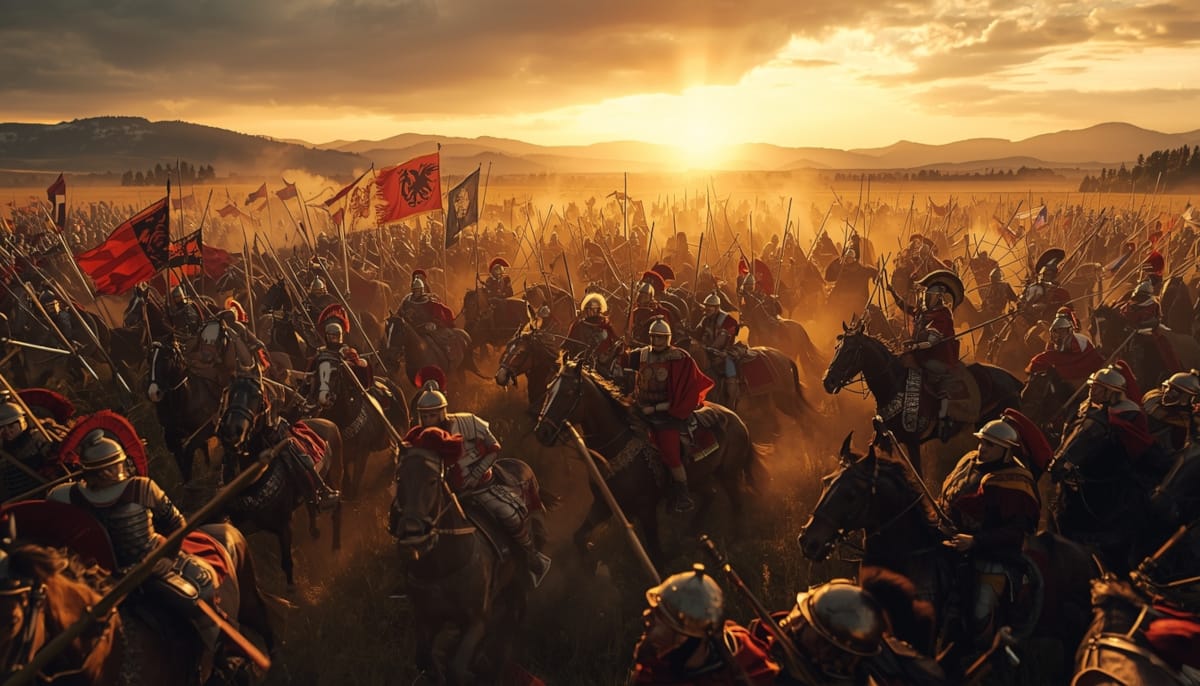
CERNAY, September 15, 58 BC — The Germanic threat looming over Gaul and, ultimately, over Italy has been neutralized. In a battle that will pass into the annals of military history, the legions of Gaius Julius Caesar have crushingly defeated the host of the Suebian king Ariovistus.
Geopolitics of the Conflict
The situation was untenable. Ariovistus, originally invited by the Sequani, had become a tyrant, occupying a third of their lands and demanding hostages from our allies, the Aedui. With 120,000 Germans already settled in Gaul and more crossing the Rhine, the "migration" was turning into a full-blown invasion. After the failure of diplomatic negotiations—where the German had the audacity to challenge Rome's right to intervene—the weapons have spoken.
Tactical Analysis: The Order of Battle
The clash took place on the plain of Alsace, near the Vosges. Ariovistus, trying to cut the Roman supply lines from the territory of the Sequani and the Aedui, executed a flanking maneuver, encamping to the south of Caesar's position. For days, Caesar tried to provoke battle, but the Germans, superstitious, refused to fight before the new moon.
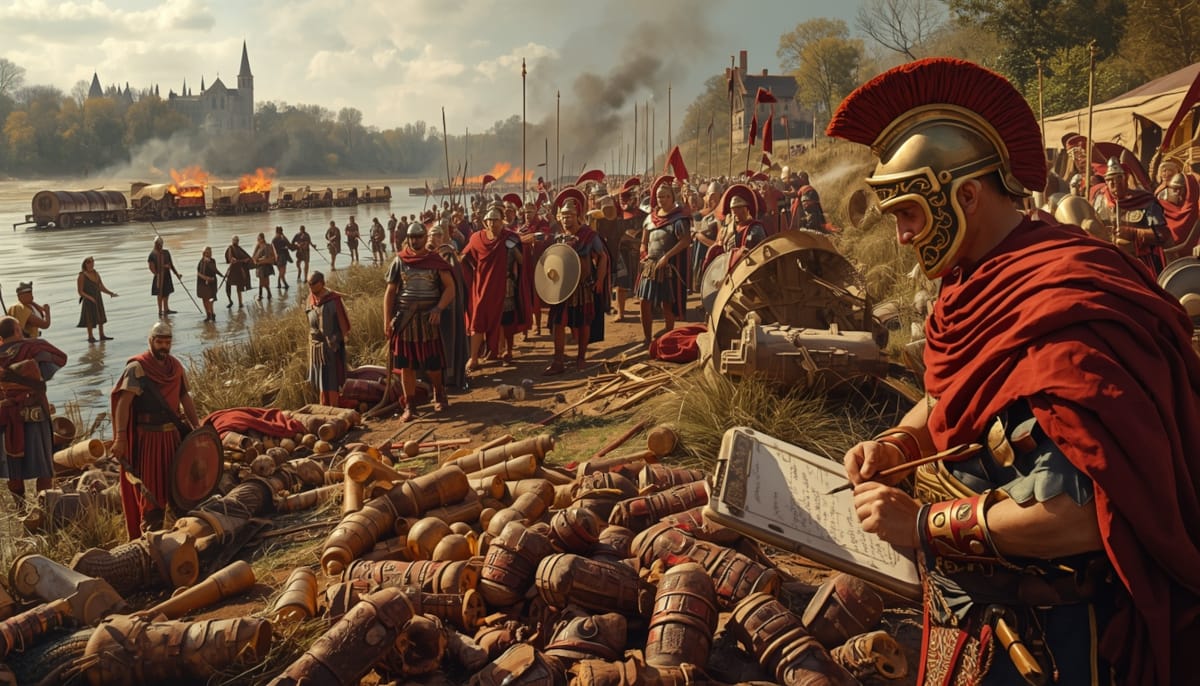
Yesterday, Caesar forced his hand. He deployed his six legions in triplex acies (three lines) and marched directly against the enemy camp. The Germans, left with no choice, formed up by nations: Harudes, Marcomanni, Triboci, Vangiones, Nemetes, Sedusii, and Suebi. They ringed their rear with carts and wagons to prevent flight, placing their women there.
The Decisive Moment
The clash was brutal. The Germans charged with such speed that there was no time to hurl the javelins (pila); the fight was sword against sword. While the enemy's left wing collapsed, their right wing, numerically superior, pressed dangerously on our line. It was then that the young Publius Crassus, commander of the cavalry, showed brilliant initiative. Without waiting for orders, he mobilized the third reserve line to support our hard-pressed troops.
This maneuver broke the German momentum. The retreat turned into a massacre. The pursuit lasted 50 miles to the Rhine. Ariovistus managed to escape in a boat, but his army has ceased to exist. Two of his wives and a daughter have perished.
Strategic Consequences
In a single campaign, Caesar has ended two massive wars (the Helvetii and the Germans). The legions will now winter in the territory of the Sequani under the command of Labienus. The message is clear: the Rhine is the frontier of civilization, and Rome is its guardian.

Imported Germanic Firewood (Lightly Charred)
Get your villa's hypocaust ready for winter with authentic Suebian wagon wood! Gathered straight from the banks of the Rhine after the hasty flight of Ariovistus's host. Burns fast, gives off excellent heat, and leaves behind an unmistakable aroma of victory and barbarian defeat. Stock strictly limited to whatever didn't sink in the river!
* Donation to the Pultsar News project



Comentarios ()