
A HUNDRED THOUSAND DEAD IN ONE SUMMER: the plague empties Florence, and seven ladies and three young men flee to the hills to tell each other stories so as not to lose their minds
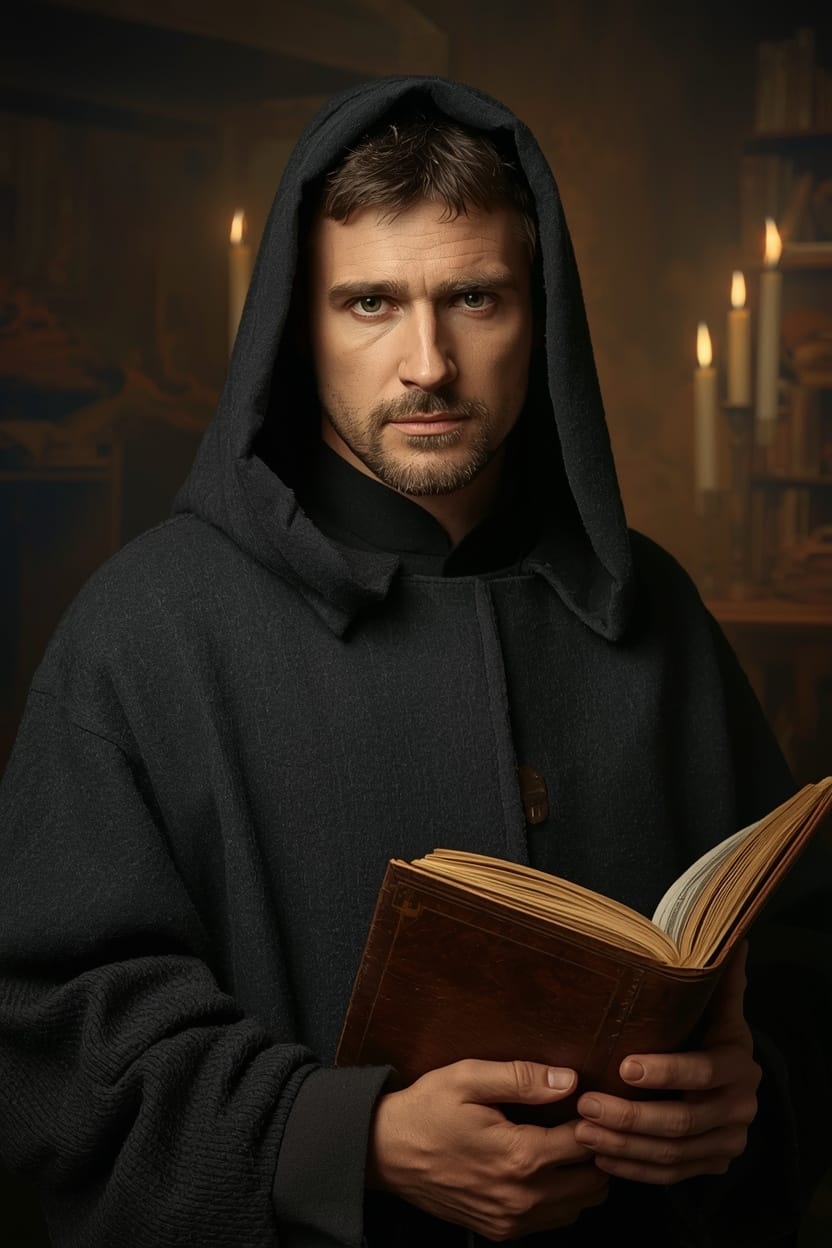
FLORENCE, SPRING AND SUMMER OF 1348 | FRIAR WILLIAM | 🏰 MEDIEVAL TODAY · CHRONICLES
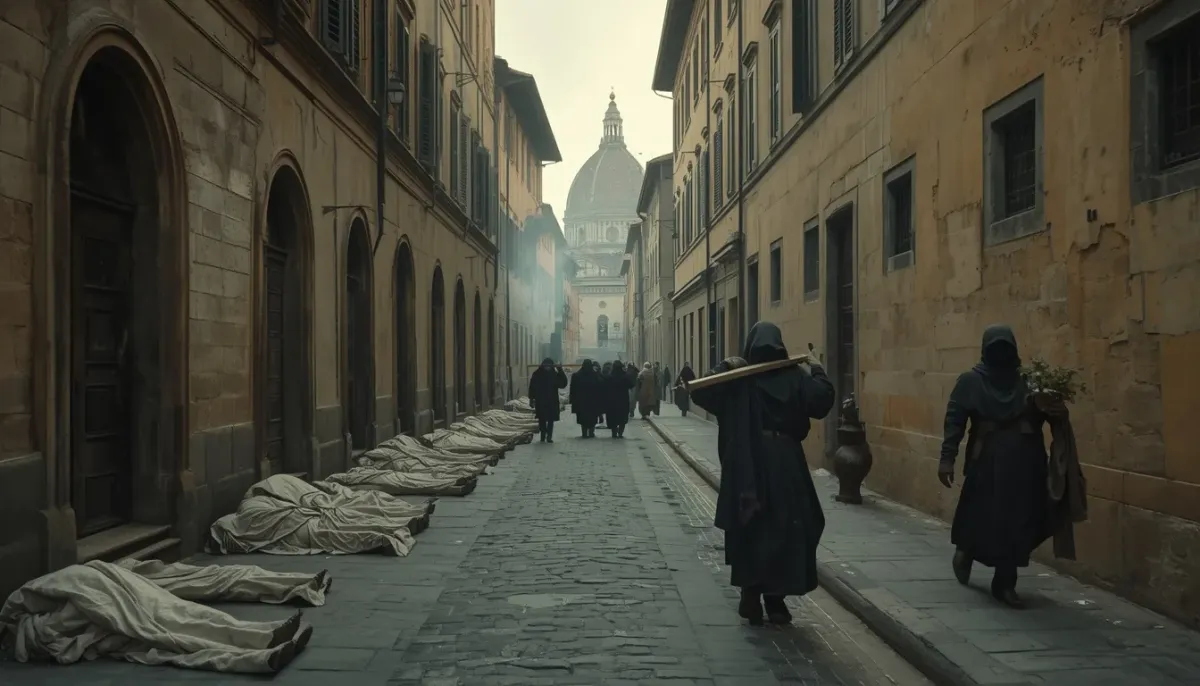
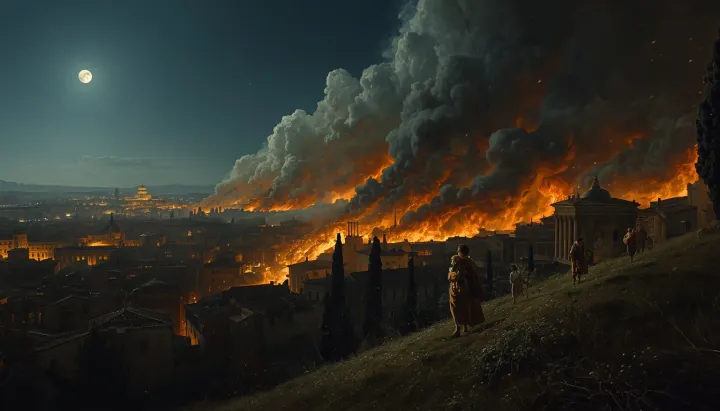
The most beautiful city in Italy is being left with no one to look upon it. At the doors of the houses, especially at daybreak, there lie corpses beyond counting, shrouded any which way or not shrouded at all, waiting for the bier to pass. He who writes this has seen a single litter bear away husband and wife together, and another two brothers, and another a father with his son. Through the streets there floats a sweetish smoke of burning herbs, with which the living try to thicken the air against the stench of the dead, and above all of it rises, still uncrowned, the dome of Santa Maria del Fiore, which perhaps will not see finished any of those who flee today.
I set down as testimony what my own eyes beheld, for there are things that, had a man not seen them himself, he would scarcely dare to write.
Chronicle: out of the East it came, and nothing could stop it
Those who keep the count of the years tell us that it was the year thirteen hundred and forty-eight of the Incarnation when the mortality entered Florence. It was not born here: it came from the parts of the East, where years before it had already depopulated entire provinces, and from there, without rest, from one place to another, it made its way most lamentably toward the West. There are those who attribute it to the influence of the stars; there are those who, with greater fear of God, hold it to be the just punishment of our iniquities. The chronicler does not judge the cause: he records that, whatever it was, against it neither human wisdom nor any providence availed.
And not for lack of trying. The city was purged of filth by officers appointed for the task. Entry was forbidden to every sick man. A thousand counsels were given for the keeping of health. Humble supplications were raised to God, not once but many times, in ordered processions and in other manners. As spring came on, the disease began, in a manner horrible and portentous, to show its grievous effects. None of those measures so much as grazed it.
Medicine: the gavoccioli and the third day
It is fitting that the reader should know how this plague kills, for in the how lies all its horror. It does not announce itself with bleeding from the nose, as it did in the East. Here, the first thing to appear, in men and women alike, are certain swellings in the groin or beneath the armpits — the gavoccioli, which the common folk call buboes — some the size of a common apple, others like an egg, some larger and some smaller. From those two parts of the body, in a short space, the deadly buboes pass to breaking out everywhere; and in the end the matter turns into black or livid blotches, first on the arms and thighs and then over the whole body, in some large and few, in others small and thick. And just as the buboes were and still are a most certain sign of approaching death, so too are those blotches for everyone on whom they appear.
Against these afflictions neither the counsel of physicians nor the virtue of medicine availed. Almost all died on the third day after the signs appeared, this one sooner and that one later, and most often without fever or other symptom. And the physicians — among whom, be it known, the number of those who had never learned the art of healing had grown without measure — could not tell whence the malady sprang, and so took measures that were no measures at all.
Most dreadful of all is how it spreads. It seized the healthy through contact with the sick in no other way than fire seizes upon dry or greasy things when they are brought very near. And it was worse still: it was enough to touch the clothes or anything the sick man had used, to contract the malady. I shall say something I should scarcely believe had I not seen it: the rags of a poor man dead of the plague, thrown into the public street, were rooted about by two pigs which, after turning them over with their snouts and worrying them with their teeth, in a little while, as though they had taken poison, fell down dead upon those very rags. This I saw with my own eyes.
Society: three ways of being afraid
From so much terror there were born in the living three ways of facing it, and all three deserve setting down, for they portray man better than any sermon.
Some thought that to live with moderation and keep apart from all excess was the best defence. They gathered in companies, shut themselves up in houses where no one had fallen ill, used temperately of the most delicate foods and the finest wines, and there passed the time with music and what diversions they could, letting no one speak to them, nor wishing to hear any news of the dead or sick from outside.
Others, of the contrary opinion, maintained that the sure remedy was to drink without measure, to go about singing and making merry, to satisfy every appetite, and to laugh at whatever happened. And they put it into practice as best they could, going day and night from one tavern to another, and yet more freely in other people's houses; for since each man held himself for dead, he had abandoned the care of his goods and of himself, and most of the houses had come to be held in common, and the stranger used them as the very owner might have done.
There was a third group, of the middle way, which neither mortified itself in eating like the first nor ran riot like the second, but used all things in sufficiency; and these, without shutting themselves up, went out carrying in their hands flowers, sweet-smelling herbs, and divers spices, which they often held to their noses, deeming it an excellent thing to comfort the brain with such odours, since the air seemed all laden and corrupted by the stench of the bodies.
Bitter Gossip: when brother forsakes brother
Here the chronicle ceases to be a thing of curiosity and turns sorrowful, for what the plague broke was not bodies alone. The reverend authority of the laws, divine and human, was dissolved, since their ministers were dead, sick, or so bereft of subordinates that they could exercise no office at all; and each man had licence to do as he pleased.
And what broke deepest was the blood itself. The terror entered so far into men's hearts that the brother forsook the brother, the uncle the nephew, the sister the brother and, many times, the wife the husband. And what is more extraordinary and well-nigh incredible: fathers and mothers refused to visit and tend their own children, as though they were not theirs. To the sick — whose number was beyond reckoning — there remained no succour but the charity of the few friends who had any, or the greed of servants drawn by exorbitant wages; and even these, rough folk unused to the office, served scarcely for fetching what the sick man asked or for marking down when he died.
So fast did men die that mourning itself came to an end. The dirges ceased, the candles, the funeral train. The people — and this friar tells the truth though it grieve him — came to take no more heed of the men who died than would be taken today of a few goats.
Feature: the pits and the countryside
The dead of the common sort, kept in their houses by poverty, sickened by the thousand and died almost all without aid. Many breathed their last in the open street; of others, shut indoors, it was known that they had died sooner by the stench of their bodies than otherwise. The neighbours, more from fear of contagion than from charity, drew out the corpses and left them before the doors.
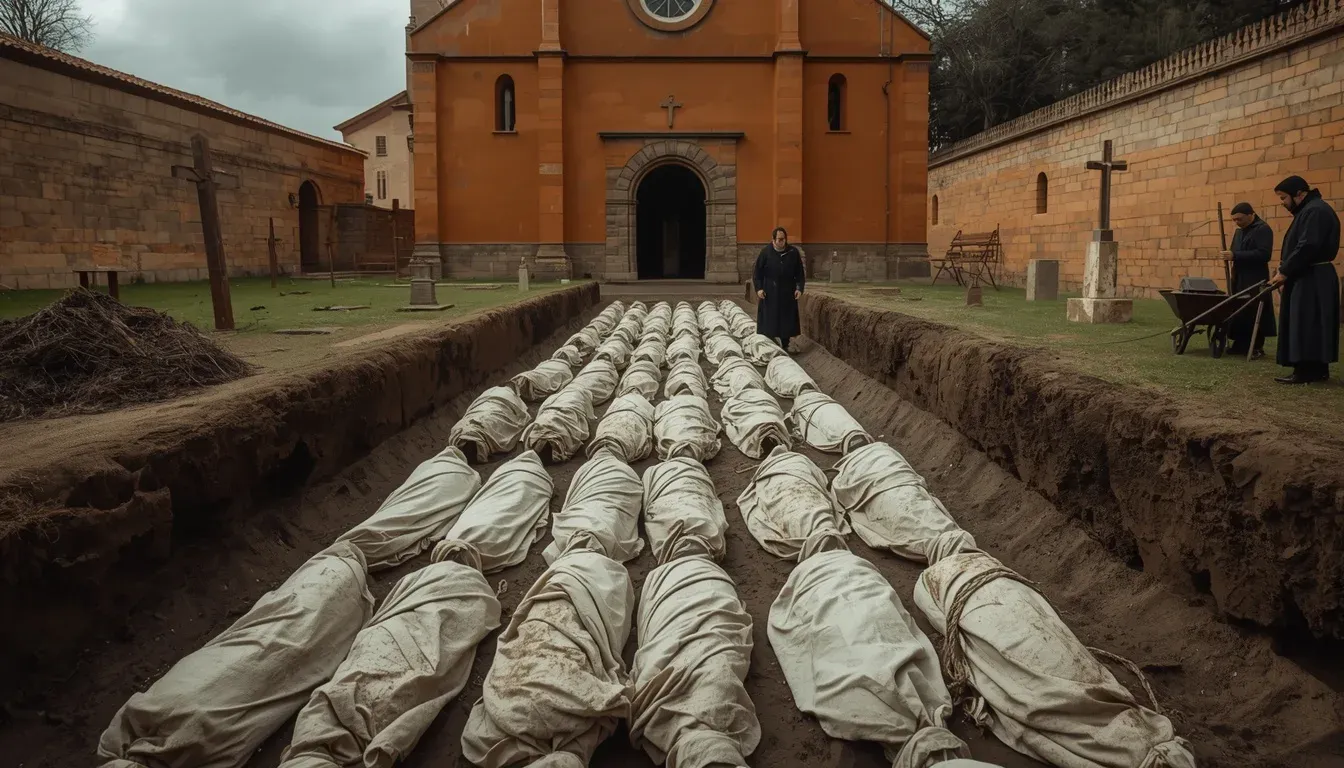
And since the consecrated ground did not suffice to bury so great a multitude, there were dug in the cemeteries, when all else was full, enormous pits, where those who kept arriving were laid by the hundred, heaped up in layers:
“…and being piled there in layers, as cargo is stowed in the hold of a ship, they were covered with a little earth, until the brim of the pit was reached.”
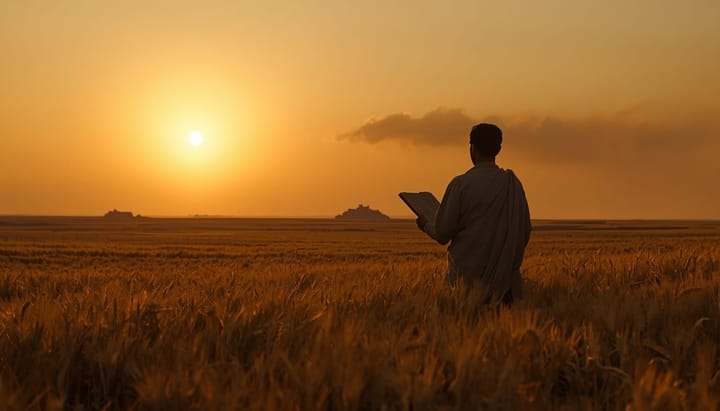
Nor was the countryside spared. Through the hamlets and the fields, the poor labourers and their families, with neither physician nor servant, died not as men, but well-nigh as beasts, along the roads and beside the houses, by day and by night. And the oxen, the asses, the sheep, the pigs, the fowl, and even the dogs, so faithful, driven from their homes, wandered loose through the fields where the wheat stood unreaped; and many, like creatures of reason, after grazing all day would return at night, sated, to their houses, with no shepherd to guide them.
Reflection: a hundred thousand empty tables
How many died? It is believed for certain that, between March and the following July, more than a hundred thousand human beings perished within the walls of Florence — a city which, before the calamity, was perhaps not held to be so populous. The chronicler sets down the figure as he heard it; if it errs, it errs above or below, but the order of the horror is that one.
And behind the figure stand the tables. How many magnificent palaces, how many beautiful houses, how many memorable families were left empty down to the last servant. How many inheritances without lawful heir. And the sentence that best sums up this summer was left in writing by the Florentine who lived through it, and this friar could not put it better:
“How many brave men, how many beautiful ladies, how many gallant youths, whom Galen, Hippocrates, or Aesculapius would have judged in the soundest health, breakfasted in the morning with their kinsmen, companions, and friends, and that very night supped with their forefathers in the other world!”
Closing: ten young people decide not to lose their minds
And here, readers, in the midst of so much death, there occurs the one thing that gives hope to this chronicle, and for that reason I keep it for the end.
On a Tuesday morning, in the venerable church of Santa Maria Novella, all but empty, there met seven young ladies — none older than twenty-eight nor younger than eighteen, all of noble blood and honest gaiety — clad in mourning, as the season required. After hearing the office, they sat down in a ring in a corner, and the eldest and most prudent of them, whom the chronicler of those events called Pampinea, took the floor. What she said came to this: that it served nothing to stay and count the dead; that they had villas in the hills, gardens, cool wine, and good music; and that, since here there was naught but grief, it would be better to withdraw to the countryside to live honestly what time remained to them, without hearing the bells toll for the dead.
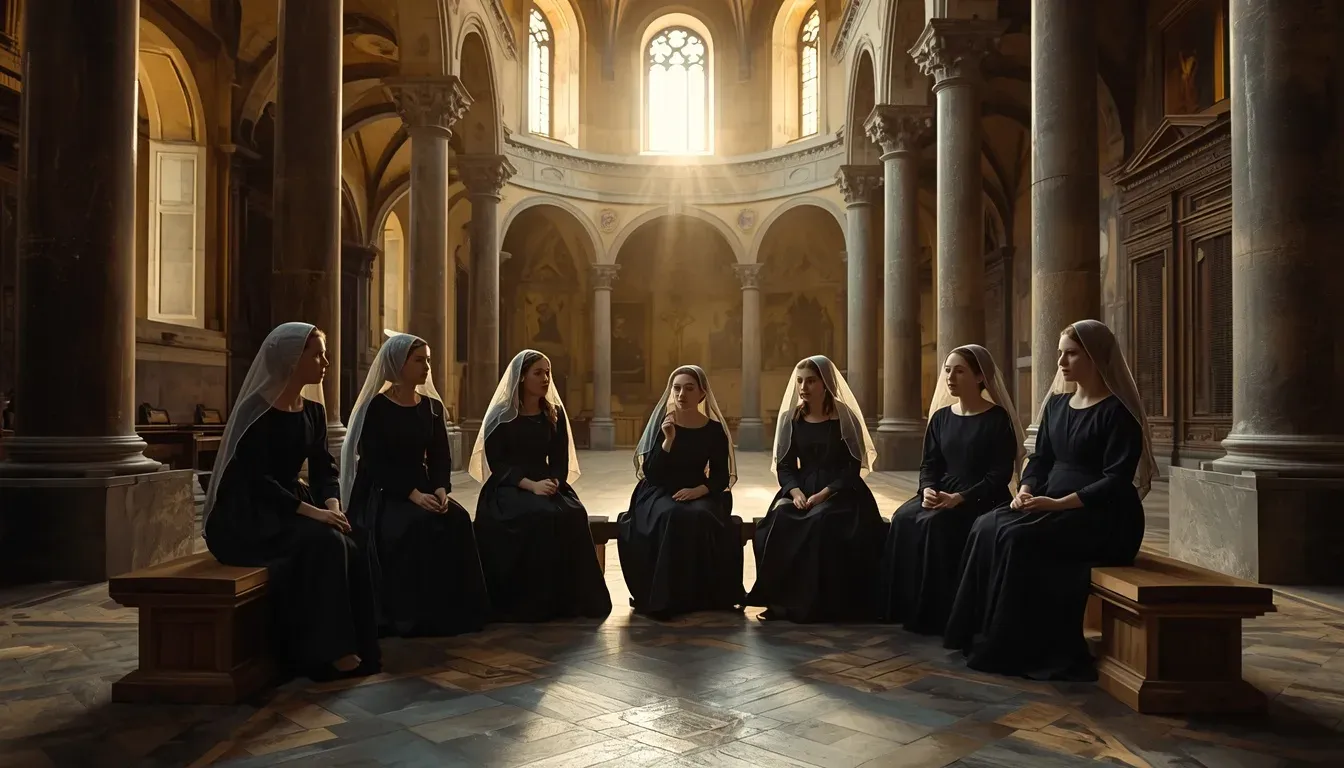
They were joined shortly after by three young men — Panfilo, Filostrato, and Dioneo — and the ten set off for a villa among the olive trees of Fiesole. There they agreed upon a rule simple and luminous: that each afternoon, in the shade, each one would tell a story to the others. Ten people, ten days, a hundred tales.
Mark well what they did, for it holds a lesson that not even the pulpit teaches better: when the plague had broken everything — the law, the family, the mourning, the modesty, the very count of the dead — ten young people decided that the last thing a human being must let go of, though the sky come crashing down upon him, is the story. They did not flee only from death: they fled toward the tales. And from that dreadful summer, while the city buried its own in layers like cargo in a ship, there was born one of the most living books that Christendom has ever produced.
Sometimes, against the plague, the only thing left standing is a tale well told. And, as it turns out, that is enough.
— Friar William, from a Florence learning to bury its own a hundred at a time.
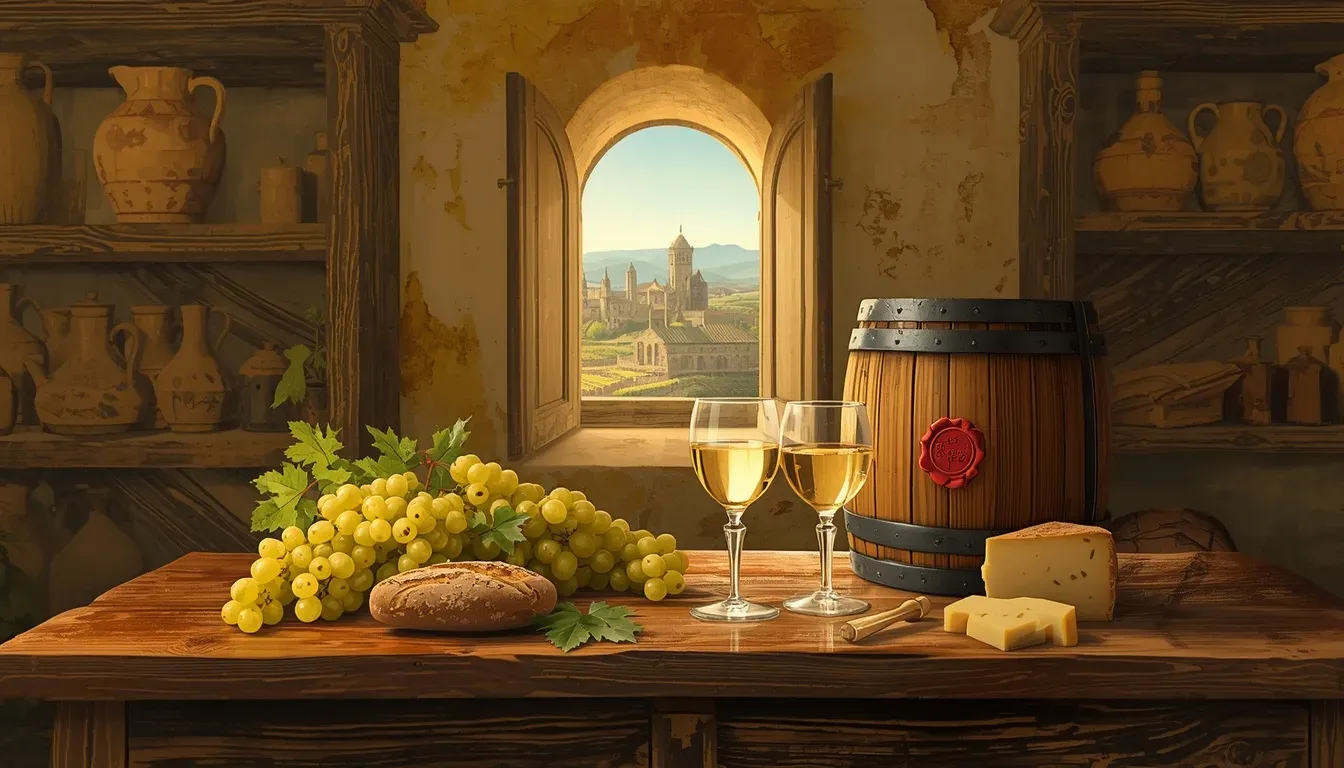
Vernaccia di San Gimignano — Winery of the hills of the Val d'Elsa
Does a long retreat in the countryside await you this season?
The golden white of the Tuscan towers, the only wine the supreme poet Dante deemed worthy of citing by name. Pressed on the slopes of San Gimignano and left to rest in chestnut carratello. It accompanies honest conversation, aged cheese, and long afternoons far from the bustle of the city. For those who have decided, with sound judgement, that the best company these months is that of a few discreet friends and a well-laid table. Delivered in a flask sealed with the winery's mark.
* A donation to the Pultsar News project
Comentarios ()