
THE 35-MILLION MAN: Diocles retires, the Lusitanian charioteer who earned more money than any athlete in history and lived to tell the tale
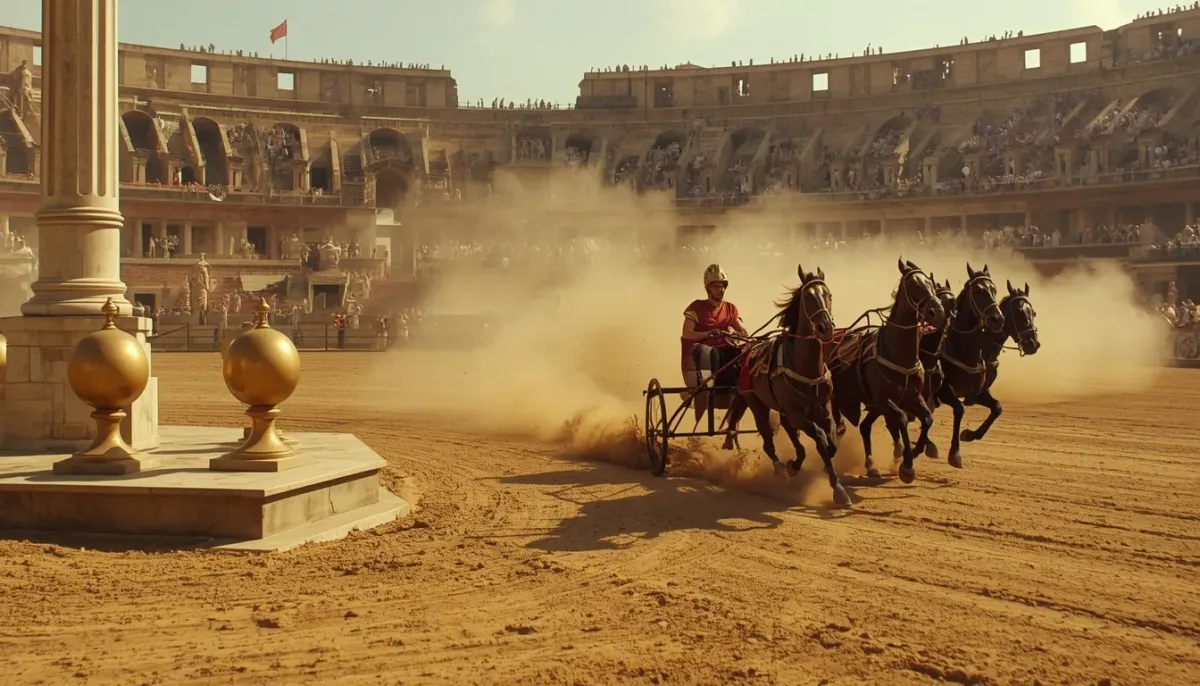
ROME, CIRCUS MAXIMUS | MARCUS CLAUDIUS | 🦅 ROMA SPQR · SPORTS
Let us begin where everyone begins when they speak of this man: with the money. Thirty-five million, eight hundred sixty-three thousand, one hundred and twenty sesterces. That is the sum Gaius Appuleius Diocles, a Lusitanian, charioteer by trade, has earned across twenty-four seasons going round and round a track of sand. It is, as far as this correspondent’s reckoning can reach, more than any man has ever earned for competing at anything. And the reader had best sit down before I translate what that mountain of coins means, because he will not believe it.
But first a word of honesty, which at Pultsar is paid up front: nearly everything we know of Diocles fits on a single tombstone. Tacitus does not tell it, Suetonius does not tell it, no poet ever sang it. What remains of the most lucrative sporting career in history is a monument of stone that his colleagues in the trade—or he himself—had engraved with the complete bookkeeping of his life. An invoice in marble. So this chronicle leans on that marble for the numbers, and on what all Rome knows of the Circus for the rest. Where the marble falls silent, we say so.
Sports: the figures of a career that cannot be repeated
The tombstone is as meticulous as a ledger, because that is precisely what it is. Diocles first climbed into a quadriga at eighteen and steps down now, at forty-two. In between, twenty-four seasons and these numbers:
- 4,257 starts onto the track.
- 1,462 victories.
- More than fourteen hundred second places and several hundred thirds.
Do the division: he won one of every three races he ran, for a quarter of a century. In a sport where four compete at once and where second place barely pays, finishing first a third of the time over twenty-four years is not a hot streak: it is a system. Diocles was not the fastest on a good afternoon; he was the one at the top every afternoon for twenty-four years.
The tombstone breaks it down even by type of victory: those he won leading from the front and holding on, those he won charging from behind on the final lap—his specialty, the one that drove the stands wild—those he won in big-purse races with bags of fifteen and thirty thousand sesterces. He is the first athlete in history to retire with his own technical record carved in stone. A phenomenon who knew exactly what he was worth.
Business: what 35 million sesterces really is
Here is where the reader needed to be seated. Let us put Diocles’s fortune into things you can touch.
A legionary of the Empire today earns around twelve hundred sesterces a year. With what Diocles has won going round in circles, you could pay the wages of an entire legion—more than five thousand men—for close to six years. Or, as those who tally these things in the bureaus put it: the fortune of a single Lusitanian charioteer would suffice to supply grain to the whole city of Rome for nearly a year, or to cover a fifth of what it costs to keep the Roman army on a war footing for one campaign.
Let it be clear where this reckoning comes from, because it matters: the figure of 35 million is from the tombstone, firm as the stone. The comparisons are this writer’s own and those of the scholars who have run the modern numbers—and the modern scholars, when they set about converting it to the coin of their own day, hold that Diocles would today be, by a wide margin, the highest-paid athlete who has ever lived, above any gladiator of the ball or the ring of ages to come. Take the comparison for what it is: a rule of thumb to grasp the scale, not a figure from the stone.
How does one earn such a fortune? Not on a salary. Diocles was paid by victory, and the purses of the great races were colossal; he drew bonuses for charging back from behind, bonuses for the double, and—like any star—transfer fees. Because yes: the Circus had a transfer market.
Chronicle: how a race is won in the Circus Maximus
To understand why this man was paid like a legion, one must go down onto the sand.
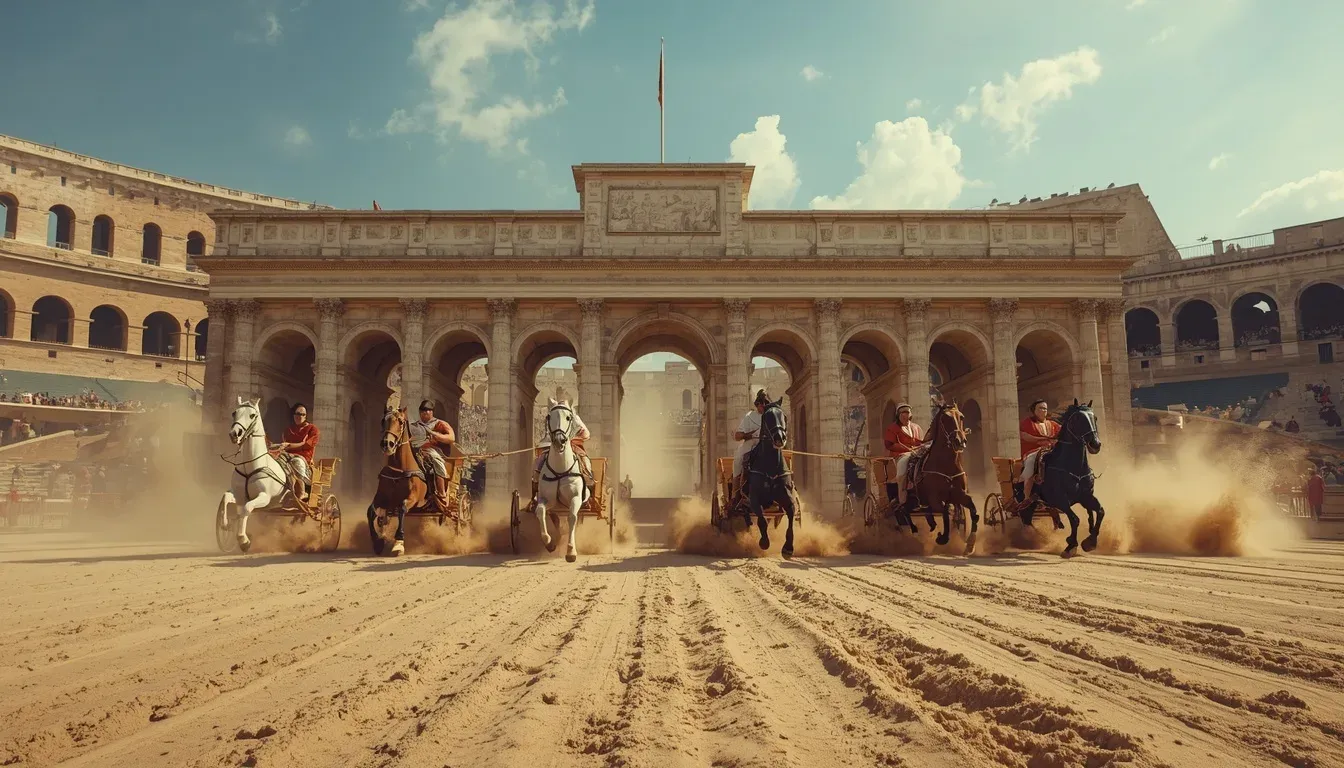
The Circus Maximus is the largest entertainment venue in the world. It holds—so says one who has counted the tiers—two hundred and fifty thousand spectators, five times the capacity of the Flavian amphitheatre where the gladiators kill one another. A quadriga is a featherweight cart, little more than an axle, two wheels and a board to stand on, drawn by four horses abreast. They run seven laps of the circuit around the central spina, some four thousand paces at full gallop. The first to cross after the seventh wins.
Everything is decided in the turns. At the end of each straight, the track narrows against the metae—the cones of gilded bronze that mark the curve—and there, in that funnel, is where it is won, lost and died. The charioteer who takes the curve closest to the spina cuts the path short; the one who takes it an inch too tight, overturns. And overturning in a Roman quadriga is not like overturning in a Greek one: the Roman charioteer ties the reins around his waist to steer with the weight of his body, so that if the cart goes over, the horses drag him through the sand hitched to his own advantage. That is why every charioteer carries at his belt a falx, a curved sickle, with a single purpose: to cut the reins before they kill him. Such a crash they call a naufragium. A shipwreck. The word says it all.
Diocles was a master of the turn and, above all, of patience: he let the others kill themselves in the early laps and appeared on the outside in the last. That is why the stands adored him. A comeback on the seventh lap, with two hundred and fifty thousand throats on their feet, is the nearest thing to an earthquake a city can produce.
The Gossip: factions, fanatics and curse tablets
No one races alone in Rome. One races for colours. Four factions divide the Circus among them, each with its stables, its grooms, its horse-doctors and its supporters: the Whites (albata), the Reds (russata), the Greens (prasina) and the Blues (veneta). Those who study these passions tell us a cosmic meaning was even found for the colours—the four seasons, the four elements, the green of the earth against the blue of the sea—but the stands could care less for cosmology: the stands devote life and fortune to the colour they have embraced, full stop.
Diocles wore all four jackets over the course of his career—he started as a White, passed through the Green and gave his best years to the Red—which makes him something like a luxury mercenary: the fan did not want Diocles, he wanted his Diocles, the one in his colour that season.
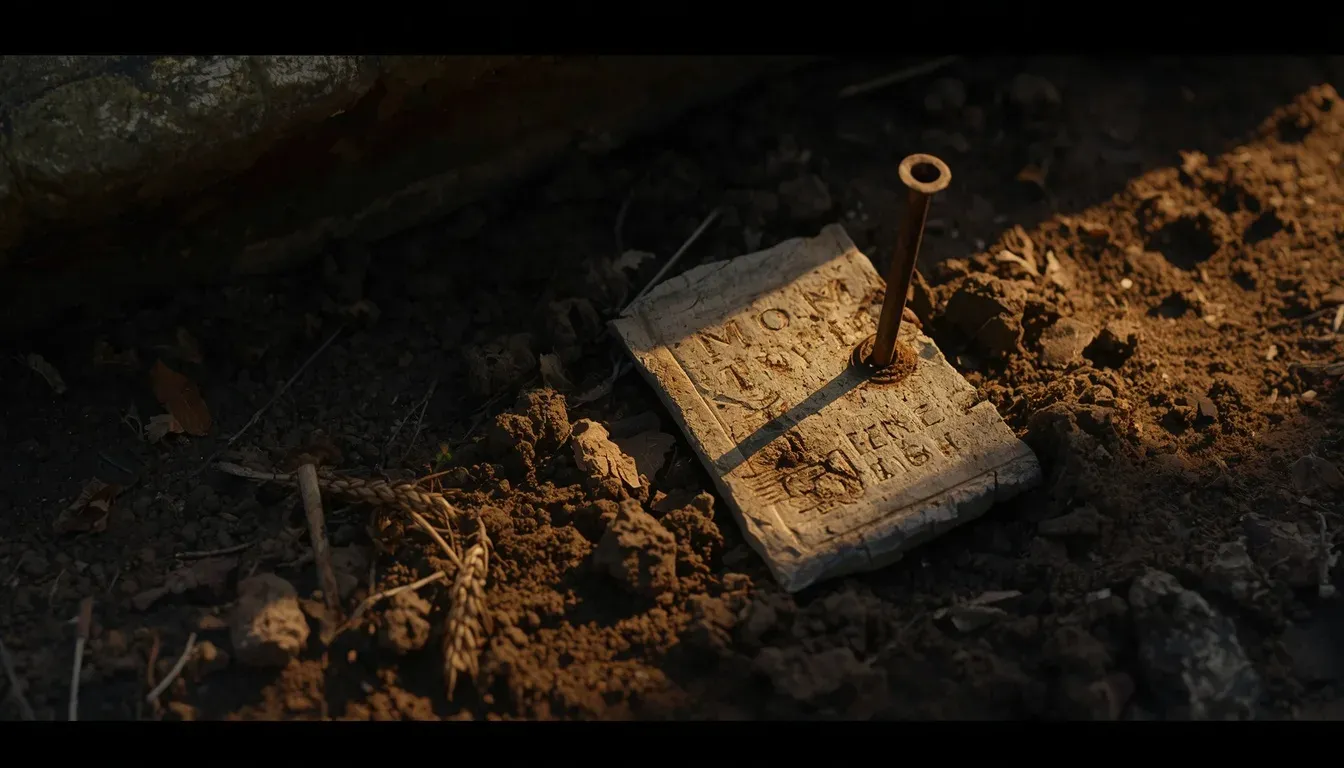
The passion for the factions is no quiet passion. The emperors themselves have been declared and dangerous fanatics: one still remembers Caligula, a Green-lover to the point of madness, dining in his faction’s stables and promising a consulship to his favourite horse. And the street goes further than the box. Beneath the sand of the Circus, the archaeologists of the future will find buried by the hundreds the tabellae defixionum: lead tablets on which an anonymous fan wrote the names of the horses and the charioteer of the rival colour and begged the gods below to break their necks at the first post. Curses in writing, folded, fixed with a nail and buried beside the track on the eve of the race. That is the true temperature of this sport.
Reflection: the strangest figure on the tombstone
And we come to what truly astonishes this correspondent, who has watched many a man race and fall. It is not the fortune. It is the age.
Diocles retires at forty-two, alive and whole.
In a trade where the naufragium is routine and where most of the great names end with a sickle in hand cutting reins that no longer come in time, reaching old age—forty-two is old for a charioteer—is a statistical rarity greater than the 35 million. The track is full of tombstones of boys of twenty, twenty-two, twenty-five, prodigies who won a hundred races and died in the hundred-and-first. Diocles’s tombstone is among the very few its own owner was able to read.
That, for the one who signs this, is the true record: not to have won more than anyone, but to have won more than anyone and to have stepped down from the cart on his own two feet. Diocles understood something the Circus forgives almost no one: that the art lies not only in taking the post close to the spina, but in knowing when to stop taking it.
Closing: an invoice in stone
We said at the outset that all that remains of this man is a tombstone, and it is time to honour that tombstone for what it is. We do not have his face, we do not have his voice, we do not have a single anecdote of his character: we do not know whether he was arrogant or humble, generous or tight-fisted, beloved of his stable-hands or loathed. We know the one thing he wished us to know, what he ordered carved into the marble with an accountant’s precision: how many times he started, how many he won, and how much he was paid for it.
Perhaps it is the most Roman way of all to pass into history. Others left treatises, temples, conquests. The Lusitanian left a sheet of results, perfect, closed, unbeaten, and went off to live on his rents with his bones unbroken. There will be those who say it is little for a man. This writer suspects that Diocles, who could count better than anyone, considered it more than enough.
The best-paid of them all hangs up the reins. And, against every prediction of the Circus, he does so on his feet.
— Marcus Claudius, from the stands of the Circus Maximus, Rome.
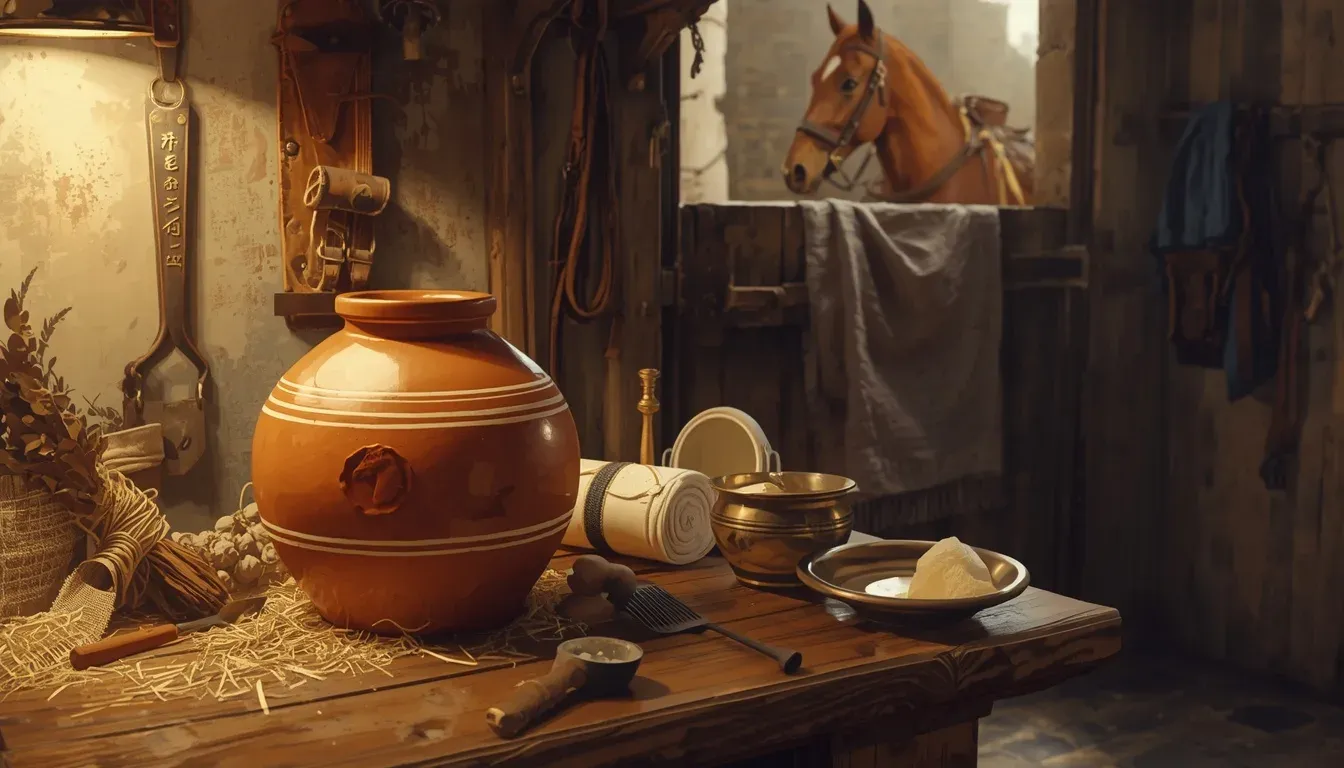
Hippiad Salve — Tendon embrocation from the Praeneste stables
Does your four-in-hand make it whole to the seventh lap?
The embrocation of herbs and resins that the finest stablemen of the Circus apply to pasterns, hocks and tendons the night before the race. It warms the muscle, sustains the joint and squeezes half a lap of stamina out of your team in the final turn. Tested in the stables of all four factions. Sealed clay jar bearing the stable’s mark; rubbing instructions included. Because the horse almost always lasts longer than the charioteer: tend to him accordingly.
* Donation to the Pultsar News project


Comentarios ()