
THE EMPEROR ASSASSINATED! Caligula falls under thirty stab wounds from his own guard in the Palatine corridor
ROME, PALATINE, 24 JANUARY AD 41 | LIVIA TACITA AND MARCUS CLAUDIUS | 🦅 ROME SPQR · SPQR PRESS
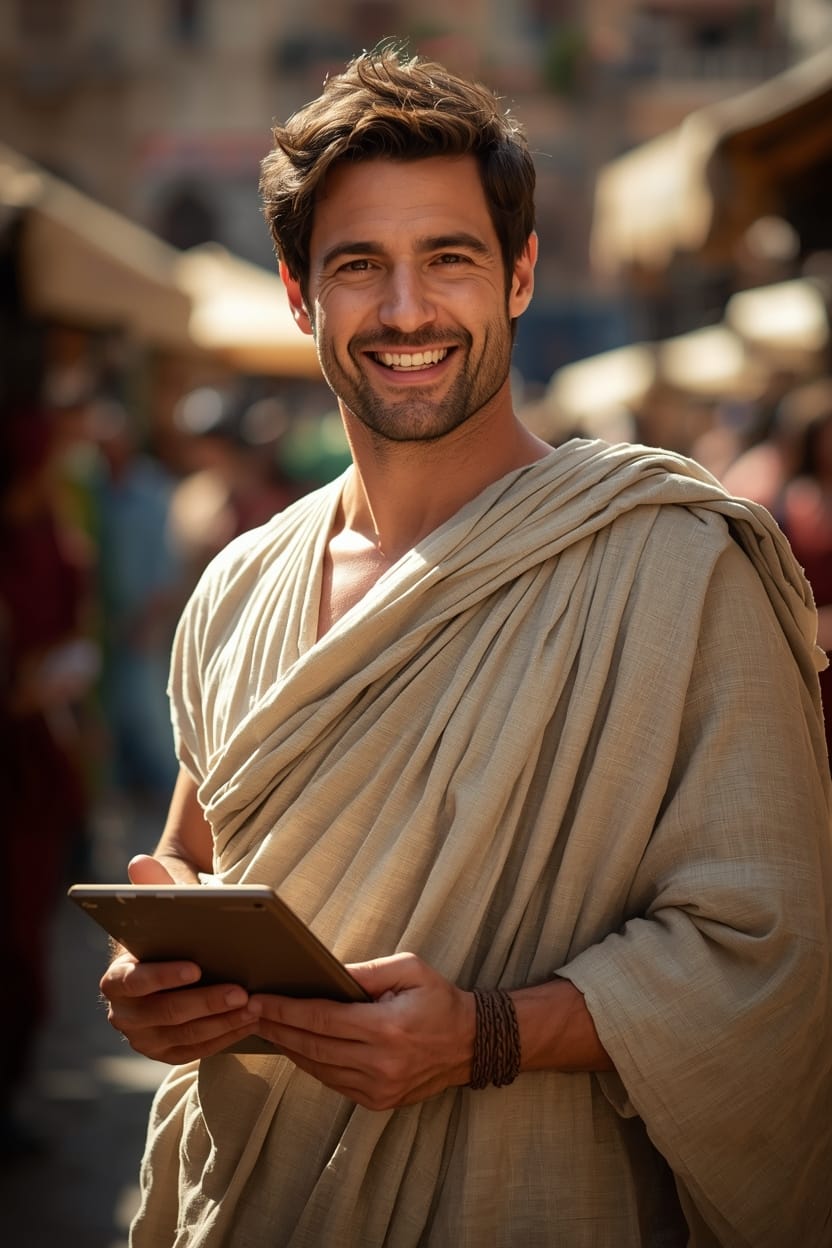
Marcus Claudius from the Palatine corridor for Pultsar News
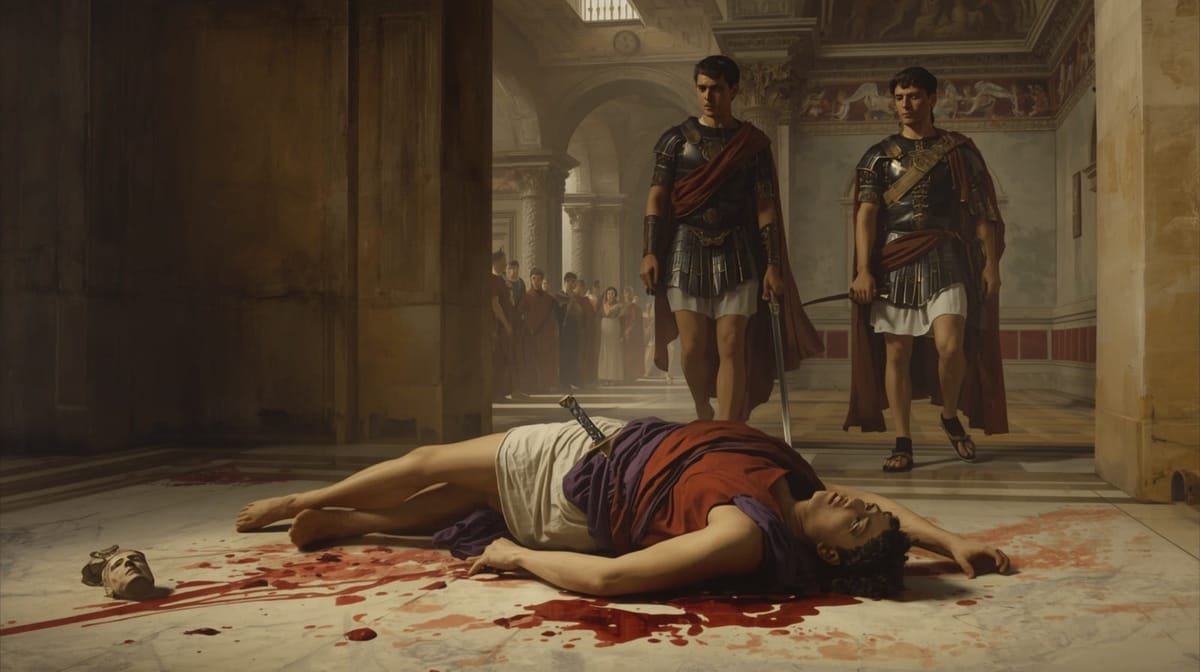
At the seventh hour, the vaulted passage linking the palace to the Palatine theatre reeks of fresh blood and Calabrian perfume. On the ground, curled in upon himself, Gaius Julius Caesar Augustus Germanicus —whom the whole city has called Caligula ever since he was a boy wearing military caligae in his father Germanicus's camps along the Rhine— has just received thirty stab wounds. Three of them came from tribunes of his own praetorian guard. One entered through the genitals, according to the conspirator who delivered it, "to repeat the day's watchword." The watchword of the day among the conspirators was a single word: *"Repeat!"*.
The Asian children who had been rehearsing the theatrical performance commissioned by the emperor himself remain in their chorus positions, frozen, unsure whether what they are seeing is part of the drama. Caligula, who had paused minutes earlier to cheer them on, will never lift his head again. He was twenty-nine years old. He reigned three years, ten months and eight days. The vault where he has just died does not appear on the official plan of the palace. This last fact, according to the master builders of the Palatine, changes everything and changes nothing.
Politics: the seventh hour in the corridor
What follows we reconstruct from the testimony of three palace doorkeepers, two centurions of the Germanic guard, and a Greek slave who served drinks at the theatre. They all agree on the essentials; they differ on the details. The Roman historian who will write this fifty years from now, Gaius Suetonius Tranquillus, will record both versions without choosing between them. Pultsar does the same:
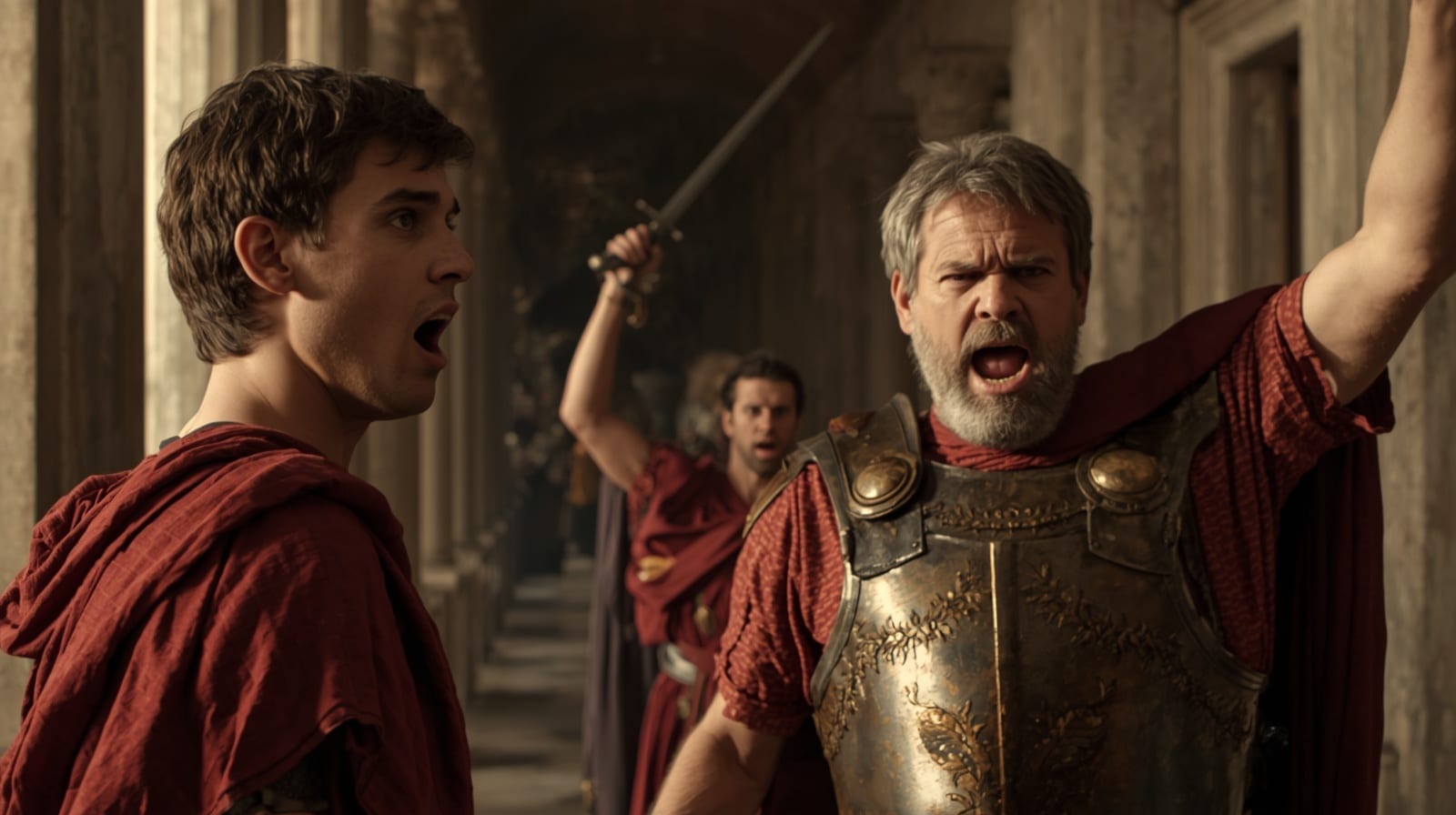
“Not all agree on what happened next. According to some, while he was speaking with the children, Chaerea, standing behind him, struck him violently on the neck with his sword, shouting ‘Take this!’, and at once the tribune Cornelius Sabinus, another of the conspirators, ran him through the chest. Others claim that Sabinus, after having the crowd dispersed by centurions who were part of the conspiracy, had asked Caligula for the watchword as was customary, and that when the emperor gave him ‘Jupiter,’ Chaerea exclaimed: ‘Receive a proof of his wrath’; and he struck him a blow on the jaw just as he turned his head toward him.”
The first blow, in either version, was delivered by Cassius Chaerea, a veteran tribune of a praetorian cohort, a man in his late fifties with scars from the Rhine that he himself had long since stopped counting. The second came from Cornelius Sabinus, also a tribune. The watchword Caligula gave to Sabinus —“Jupiter”— became his sentence: the god to whom he had declared himself equal, turned back against his own throat through a cruel joke from the very veteran he had humiliated for years.
Once felled, Caligula still cried out that he was alive. The conspirators answered by repeating the day's watchword aloud. Each of them delivered at least one stab. Thirty in all. One of them, to the genitals, cited explicitly by Suetonius without euphemism.
The cries brought the palace doorkeepers with their staves and, above all, the soldiers of the Germanic guard —the emperor's personal troop, not part of the praetorians, made up of Batavian and Cheruscan mercenaries who adored Caligula. The Germanic guard killed several of the conspirators in the passageways. They also killed two senators who happened to be passing by, with nothing to do with the plot, simply for being in the wrong place at the wrong time in a toga.
The Gossip: why Chaerea, why today
This correspondent spoke with Chaerea two summers ago, in a tavern in the Subura district where he was sharing supper with two veterans of the Fourteenth. What he grumbled about then was small and private. What he has done today is enormous and public. The distance between the two is exactly the measure of how far Caligula eroded a man who had spent thirty years serving the Empire asking nothing in return.
Chaerea had a weak point that the emperor found early and exploited without rest: a high-pitched voice. Caligula, with the schoolyard psychology that some chroniclers mistake for political genius, publicly called him effeminate and coward. When Chaerea, as tribune on duty, asked him for the day's watchword, Caligula would answer with words chosen to humiliate him in front of the troops: “Priapus”, “Venus”, words straight out of a brothel's vocabulary. If the tribune approached to thank him for some errand carried out, the emperor would offer his hand to be kissed with an obscene gesture that Suetonius records without describing.
For a Rhine veteran, that is the worst punishment an emperor can inflict: public, gratuitous, endless. Chaerea's conspiracy was not born in a vaulted passage a week ago. It was born three years ago, at every morning muster of the guard.
One final detail sums up the character of the dead emperor better than any funeral oration. The oracles of Antium had warned him months ago to beware of a man named Cassius. Caligula ordered the execution of Cassius Longinus, proconsul of Asia, who had never raised a hand against him. He forgot, however, that the other Cassius close at hand bore the same name: Cassius Chaerea. When the oracles give you a name, look at your side, not at your map.
Society: the night Caesonia and the child died too
Pultsar has the duty to report what imperial propaganda will try to bury under wax and pyre-ash in the coming weeks. We report it now because speed matters.
Late in the afternoon of the same day, a centurion —the name has not yet come out— presented himself in the women's wing of the palace and murdered Caesonia, the emperor's fourth wife, in the marital chamber. Caesonia, according to sources close to the court, had learned of the plot that very morning and had refused to flee. She was thirty-one years old and had four daughters: three from an earlier marriage, and one with Caligula.
That fourth daughter, Julia Drusilla, just one year old, the centurion killed by dashing her against a wall of the corridor. Suetonius records the fact with the laconism of an archive clerk: “His wife Caesonia died at the same time as he did, murdered by a centurion; his daughter was dashed against a wall”. There is no testimony that the child cried out. There is testimony that the centurion, on leaving, vomited in the atrium.
Caligula had said in private that the proof that Julia Drusilla was his daughter was her temperament: at five months, according to her father, she was already clawing at the faces of the children who played with her. She died, in a sense, true to that lineage, without having had time to choose it.
Politics II: the Senate on the Capitol
At sunset, the consuls Gnaeus Sentius and Quintus Pomponius convened the Senate. They avoided, however, the usual meeting hall —the Curia Julia— for a reason this correspondent has been able to confirm with two senators present:
“They did not wish to convene in the ordinary hall because it was called Julia, and therefore bore the name of the family that had just cost Rome four Caesars and an empire. They decided to meet on the Capitol.”
On the Capitol they debated what no one had dared even think aloud during Caligula's reign: the abolition of the memory of the Caesars and the destruction of their temples. That is to say: a return to the republic. The list of senators who spoke in favour includes men whose families have spent two generations collecting imperial favours. Today they remembered Brutus.
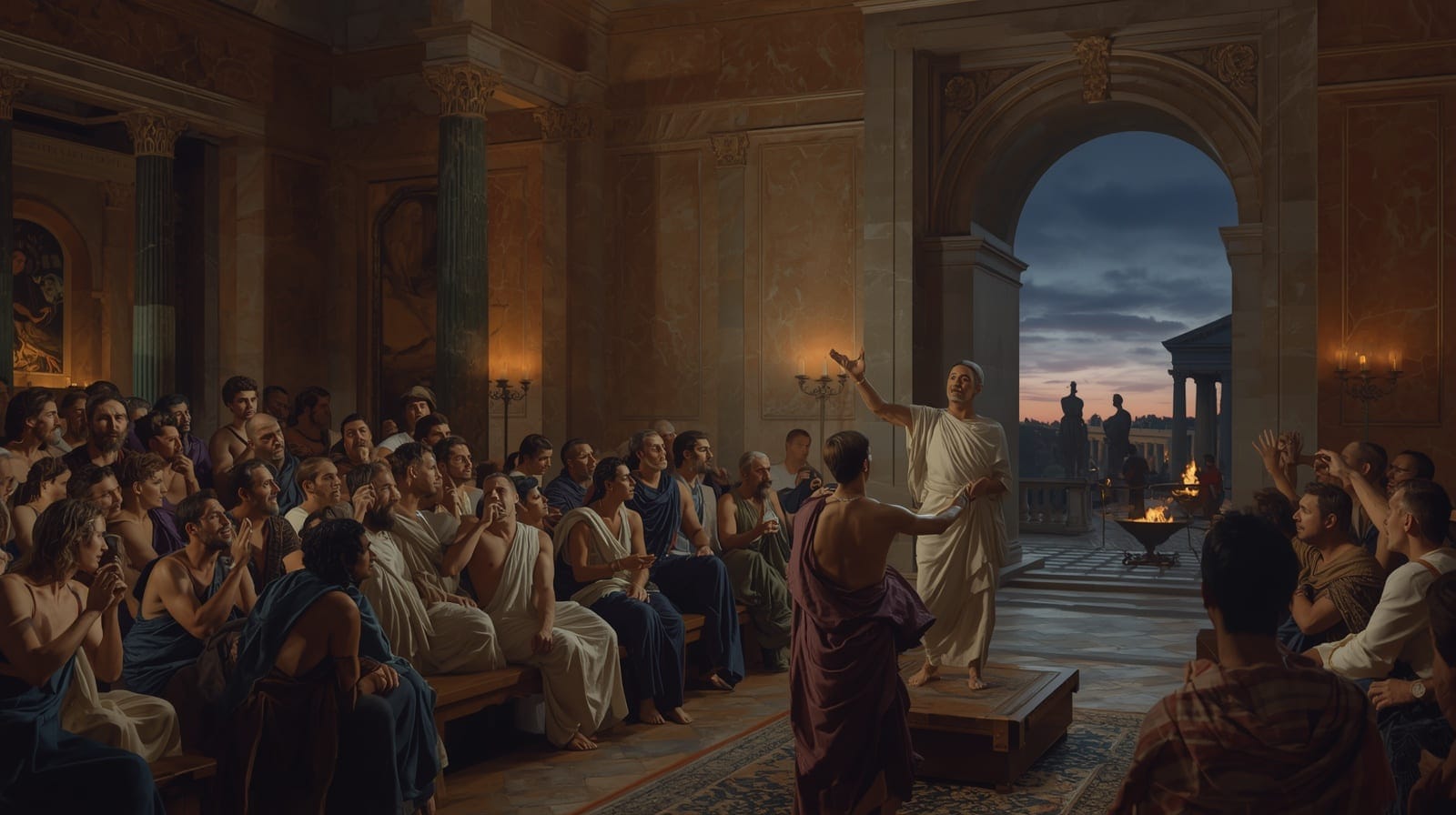
While the conscript fathers talk, however, there is another parallel meeting that may matter more: that of the Praetorian prefects in the barracks of the cohort on duty. The praetorians, who draw their pay from the emperor, have no financial interest in a republic that would cut their allowances and privileges. Tonight they are combing the palace corridors in search of any male of Julio-Claudian blood. It is claimed, still without official confirmation, that they have found one hidden behind a curtain in the eastern wing, trembling, stammering, fifty years old and with a marked limp: the dead emperor's uncle, Tiberius Claudius, brother of Germanicus, a man the court had always considered too clumsy to be dangerous. If the news is confirmed tomorrow, what is being decided today on the Capitol may come to nothing.
Reflection: the omens no one cared to read
This correspondent distrusts, out of professional habit, post hoc omens. But those in the Caligula case are not of that kind: several were documented at the time by people still alive:
- Jupiter's laughter at Olympia. Caligula had ordered the statue of Jupiter removed to bring it to Rome. When the workmen touched it, the statue let out such a roar of laughter that the hauling machines collapsed and the labourers fled.
- The dream of Jupiter's foot. The night before his death, Caligula dreamed that he was standing beside the god's throne and that the god, shoving him with the big toe of his right foot, cast him down to earth. He told Caesonia at breakfast. She advised him to make a sacrifice.
- The flamingo and Mnester. He did attend the sacrifice. During the morning ceremony he was splattered with the blood of the immolated flamingo. Afterwards, in the theatre, the actor Mnester performed the very tragedy that Neoptolemus had staged on the day Philip of Macedon was killed. Caligula watched the whole piece and applauded at the end.
Three warnings in twelve hours. None was enough. Perhaps because a man who believes himself a god cannot accept that the gods are speaking to him in code.
Closing: in the Lamian gardens
As this chronicle goes out to its first readers, Caligula's body is being moved in secret to the Lamian gardens, on the Esquiline. On a pyre improvised from wood of the nearby grove, it will be scorched —not fully cremated— and buried under a little turf. The conspirators want no ceremony, and the praetorians do not yet dare to impose one. His sisters, exiled by the emperor himself two years ago, will exhume the body when they return and give it a decent burial. They will do so grudgingly, for the next generation of Caesars may carry his blood.
Tonight Rome has three things it did not have this morning: a dead emperor, a Senate debating the restoration of the republic, and a man hidden behind a curtain whom the praetorians are about to acclaim emperor before dawn. In the Palatine corridor, the blood dries slowly. The Asian children are still there, even now. No one has told them they may leave.
— Livia Tacita, from the Capitol. — Marcus Claudius, from the Palatine corridor.
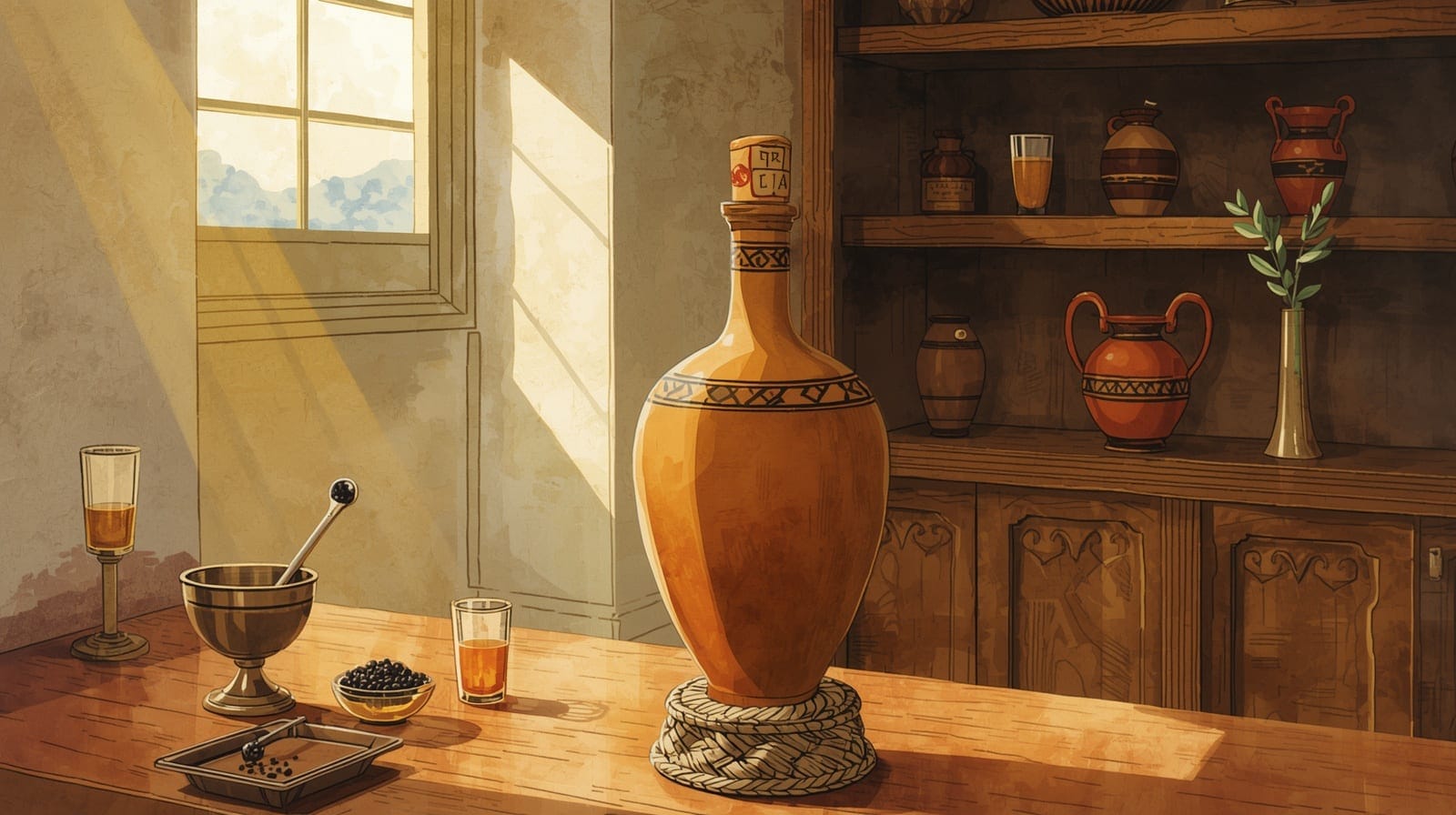
Falernian from the Cellar of Aulus Postumius — Imperial Reserve
Hosting your colleagues from the Senate tonight?
Three select vintages from the southern slope of Mount Falernus. Served warm in a bronze crater, with Attic honey and a pinch of Indian pepper. The wine the consuls choose when they would rather no one knew what is being decided in their dining room. Exclusive distribution in the Forum and discreet delivery to the domus of the Aventine.
* Donation to the Pultsar News project


Comentarios ()