
EXCLUSIVE: The Greatest Public Relations "Hack" in History. How a Usurer Became a Saint
Late in the year 1301
The financial globalization of the fourteenth century shows no signs of slowing, and the great Florentine corporations keep extending their tentacles across all of Europe. But with great expansion come great default risks. This is the story of how a liquidity crisis in Burgundy ended up generating the largest theological cybersecurity fraud on record.
It all began when corporate magnate Musciatto Franzesi, a man who had climbed from simple merchant to knight thanks to his lucrative monopolies at the court of Philip the Fair, was forced to wind down his operations in France. Pope Boniface VIII had summoned him to Tuscany alongside Charles of Valois. Franzesi managed to delegate nearly his entire investment portfolio, but he ran into a "bug" in his system: a highly toxic basket of Burgundian debtors. The Burgundians were famous for being litigious, disloyal, and expert at dodging payments.
To recover his assets, Franzesi needed a "Fixer," a collections operative with no scruples whatsoever. The choice fell on a notary named Ser Cepparello da Prato, known in France as Ciappelletto.
The Profile of the Moral "Hacker"
If a credit bureau for morality existed, Ser Ciappelletto would be on the global blacklist. Our man was a specialist in forging legal instruments (his "killer app" was drafting fraudulent contracts for free, purely for the pleasure of watching the chaos unfold). He was a professional blasphemer, an inveterate gambler with loaded dice, and a tavern regular. In short, the worst man ever born on this earth, but the perfect CEO for a hostile collections mission in enemy territory.
Armed with full power of attorney and letters of recommendation from the king of France himself, Ciappelletto settled in Burgundy, operating out of the headquarters of a local financial "startup": the house of two Florentine brothers who lent money at usury.
System Crash and a "Cancel Culture" Crisis
Everything was running according to the business plan until a biological virus attacked Ciappelletto's hardware. He fell mortally ill. The local physicians, lacking the necessary updates to treat the infection, gave him up for lost.
The two usurer brothers panicked. They faced an unprecedented public relations disaster. If they threw a dying man out into the street, their reputation would nosedive. But if Ciappelletto died in their house without confession (a certainty, given his track record), the Church would deny him burial in consecrated ground. That would unleash the "cancel culture" of the age: the citizens of Burgundy, who already loathed the Lombard usurers, would seize on the pretext to riot, loot the house, and very likely lynch them. Their business model was on the verge of collapse.
Social Engineering on the Deathbed
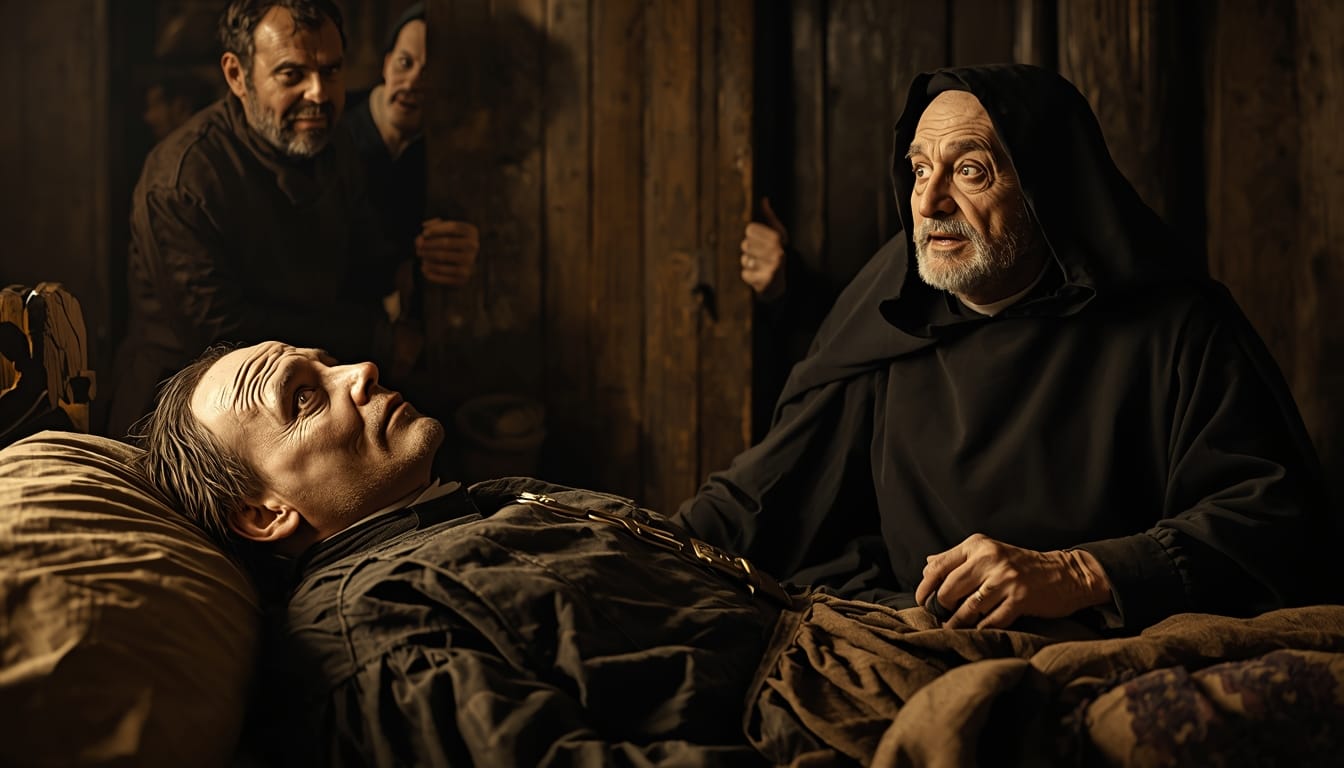
Listening to his hosts' panic from the bed, Ciappelletto decided to execute the greatest "exploit" of his career. He asked them to bring the holiest and most learned friar in the local convent. He was going to hack the confessional.
When the venerable old friar arrived, Ciappelletto launched his social engineering attack. With an impeccable user interface (weeping, sighing, and a feeble voice), he began injecting false data into the priest's belief system.
He claimed to be a virgin. He swore that his gravest sin of gluttony had been drinking water too eagerly after praying. He confessed, weeping bitterly, to having once cursed his mother as a child, and to having accidentally spat inside a church. The friar, who had no "firewall" installed against high-level sociopathic lying, absorbed every word. He marveled at the purity of this user.
The master stroke came when Ciappelletto asked to receive extreme unction and to be buried in the friar's convent, thereby securing his hosts' protection and shielding the usury firm's reputation.
The IPO of a New Saint
Ciappelletto died that very afternoon. The usurer brothers financed a high-budget funeral. But the real return on investment came from the friar.
The next day, the priest climbed into the pulpit and issued a mass "press release" to the entire city. He recounted Ciappelletto's confession, detailing his ridiculous innocence and his supposed life of extreme purity. The marketing campaign was so aggressive and the "storytelling" so perfect that the audience entered a state of devotional hysteria.
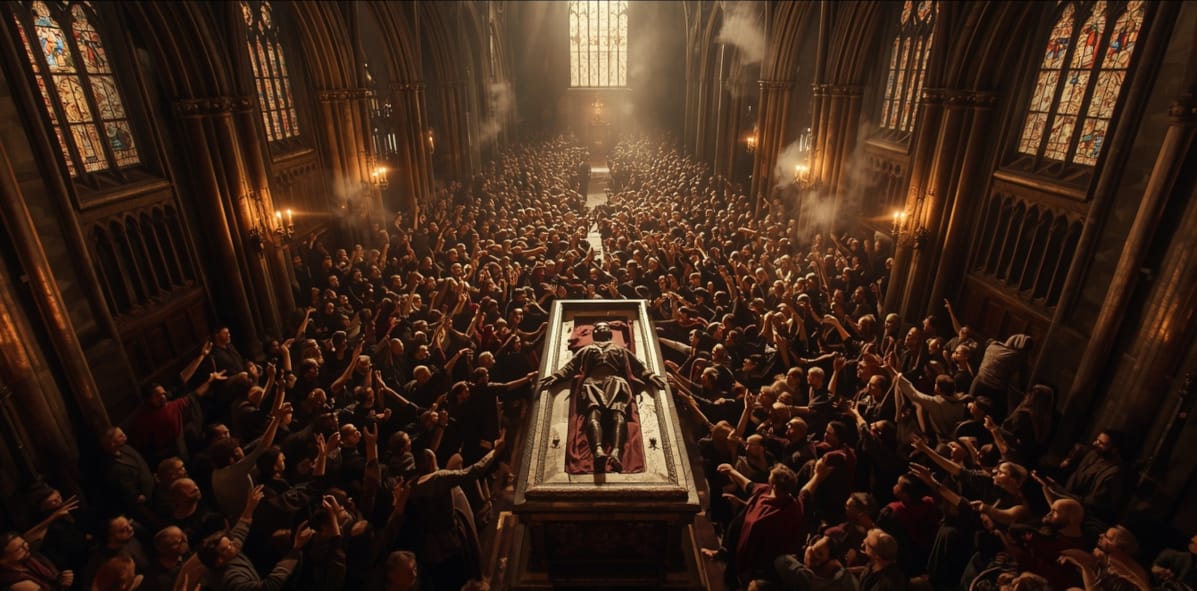
The "engagement" shattered every metric. The crowd flung itself upon the corpse to tear off scraps of his clothing as relics. He was laid in a marble sepulcher, and within days people began lighting candles, making vows, and reporting miracles. The worst man in the world had completed his posthumous "rebranding": he was now Saint Ciappelletto.
The story of Ser Ciappelletto proves that, in the great marketplace of faith and public opinion, a well-built narrative can bypass any security check. A reminder that disinformation and "fake news" are not an invention of our era, but a very ancient technology, perfected by the great con artists of the Middle Ages.
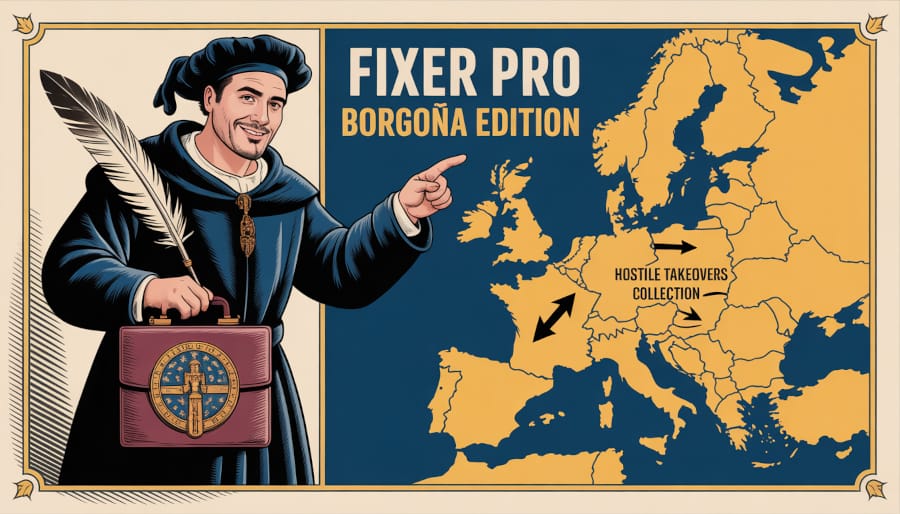
Does your debtor portfolio have a 'bug'?
Stop sending second-rate thugs. Introducing 'The Fixer Pro'. Certified notary, forgery expert, and 100% free of moralistic scruples. We guarantee the settlement of hostile collections in enemy territory (Burgundy a specialty) or the posthumous IPO of a saint. Optimize your toxic assets today!
* Donation for the Pultsar News project

Comentarios ()