
Magic or Science? The Best-Kept Secret in the Libraries of Christendom
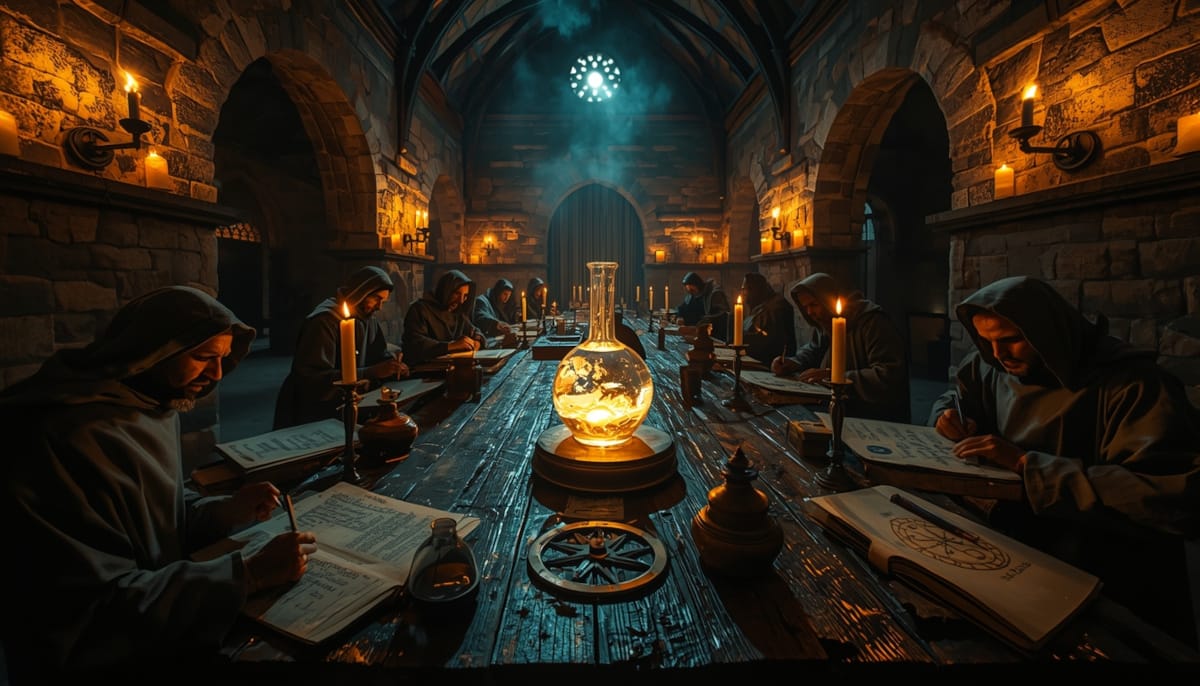
From the alchemy laboratories of Toledo to the scriptoria of Paris, a new wave of knowledge is shaking the foundations of Europe. Are the ancient pagan texts the key to the future, or a doorway to heresy?
PARIS: March 12, 1277
PARIS. — The air in the University of Paris is charged with something more than the smoke of tallow candles and the smell of old parchment. There is static electricity, an intellectual tension that threatens to burst the dikes of traditional faith. While Bishop Tempier condemns Averroist theses, in the shadows of the libraries and in the cells of the boldest monks, the true battle for the soul of Europe is being waged: the struggle to define where magic ends and experimental science begins.
For centuries we have looked to the past, to giants such as Pliny the Elder or Galen, as unquestionable authorities. But today, thanks to the immense labor of translation reaching us from the south—by way of reconquered Spain and Norman Sicily—we are rediscovering that those giants did not merely write: they experimented. And what is more disquieting to some: their methods bear a suspicious resemblance to what the common folk call sorcery.
Pliny's Legacy: Encyclopedia or Grimoire?
Leafing through the old codices of Pliny's Natural History, which have rested in our abbeys since the days of Charlemagne, one cannot help but raise an eyebrow. Pliny, that pillar of Roman erudition, speaks to us of the properties of plants and animals with the gravity of an imperial notary. But what do we read between the lines?
Pliny condemns the Persian magi, yes—he calls them impostors. But in the very next breath he prescribes binding a live chameleon under the armpit to cure fevers, or using the blood of a basilisk as protection against poisons. Is this medicine, or is it sympathetic magic? To the untrained eye, it is witchcraft. To the new naturalist scholar, it is an "occult virtue" of nature, a technical property that God placed in creation and that only the wise know how to activate. The line is so fine that a single misstep takes you from the lecture chair to the stake.
The Arab Connection: The "Tech" of the Desert
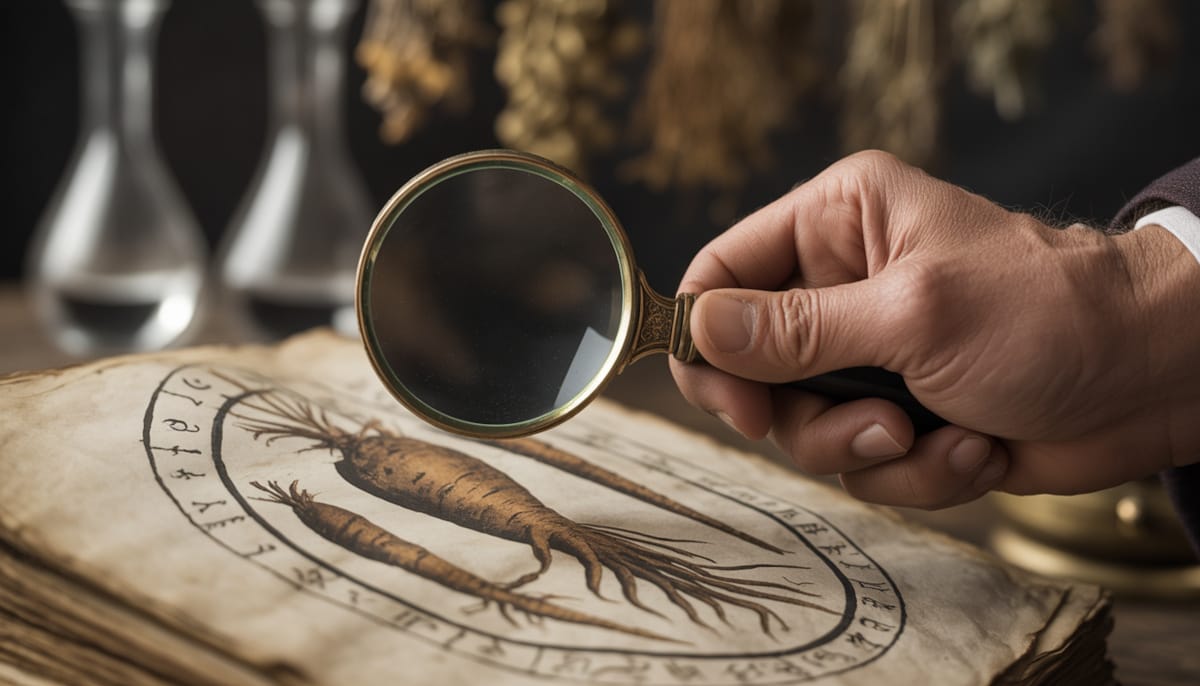
We cannot ignore the elephant in the room (or the camel in the cloister): the Arabs. Men such as Al-Kindi or Albumasar have revolutionized the way we see the cosmos.
Al-Kindi, with his theory of "stellar rays," proposes an idea both fascinating and terrifying: that everything in the universe emits radiation, and that the stars are gigantic machines imprinting destiny upon sublunary matter. If this is true, astrology is not a pagan superstition but an exact physical science, as rigorous as the geometry of Euclid.
And then there is alchemy. What for many is a greedy attempt to manufacture gold is, for the new masters, the search for the fundamental structure of matter. Is it black magic to attempt to transmute lead? Or is it simply a "disruption in the metallurgical sector" that we do not yet fully understand?
The Church's Dilemma: Saints or Sorcerers?
This is where my pen trembles slightly. The Church finds itself at a crossroads. For centuries we have accepted that demons hold power over the physical world. Saint Augustine warned us: demons are experts in physics, they live a very long time, and they have airy bodies that allow them to move at incredible speeds.
But now men such as Albertus Magnus—that German Dominican who seems to have read every book ever written—tell us that many of the marvels we attribute to demons or to saints might be simply... nature. Lodestones that attract iron, stones that cure gout, herbs that induce prophetic dreams.
If a monk uses a gem engraved with an astrological image to cure a bishop, is he invoking a planetary spirit (magic), or is he employing an advanced medical technology (experimental science)? The answer depends on whom you ask at the Sorbonne today.
Roger Bacon: The Prophet of the Future?
It is rumored that in Oxford a Franciscan named Roger Bacon is writing things that would make the Pope turn pale. Bacon speaks of an "experimental science" that surpasses pure logic. He speaks of machines that will move ships without oars, of carts that will move without horses, and of instruments to see what is far away as though it were near.
To the common folk, Bacon is a necromancer who has made a pact with the devil. To us, who read the forbidden codices by the light of the moon, Bacon is perhaps the first modern man. He understands that the magic of the past is simply the technology of a future we have not yet deciphered.
Conclusion: The Dawn of a New Era
We stand on the threshold of a seismic change. The history of magic and the history of experimental science are not two separate roads; they are the same highway, full of potholes and fog. What yesterday we called miracle and today we call magic, tomorrow we might call "physics."
In the meantime, we shall go on copying, translating and, above all, experimenting. For if God created the world by number, weight and measure, it is our sacred duty to hack the code of creation. Even if it costs us a visit from the Inquisitor.
⚗️ "The Little Alchemist" Experimentation Kit
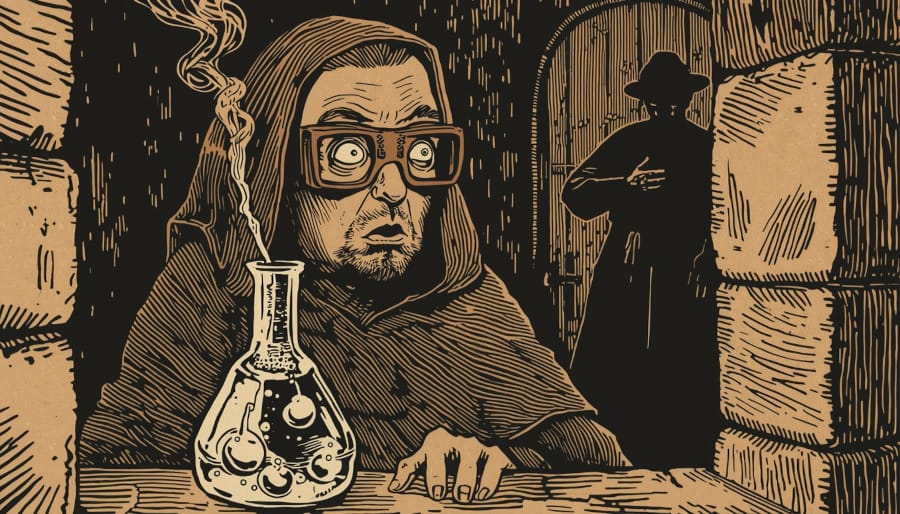
Tired of the Bishop confiscating your parchments? Want to impress the cloister by transmuting lead into something that at least looks like gold? With our new set of glass retorts and basilisk powder (100% certified heresy-free), the only limit is the vault of heaven. Includes a manual of quick theological excuses in case the Inquisitor knocks on your door before Vespers.
* A donation to the Pultsar News project

Comentarios ()