
The First Naval "Startup" in Florida: 300 Spaniards Build a Fleet from Scratch with Crossbows and Shirts
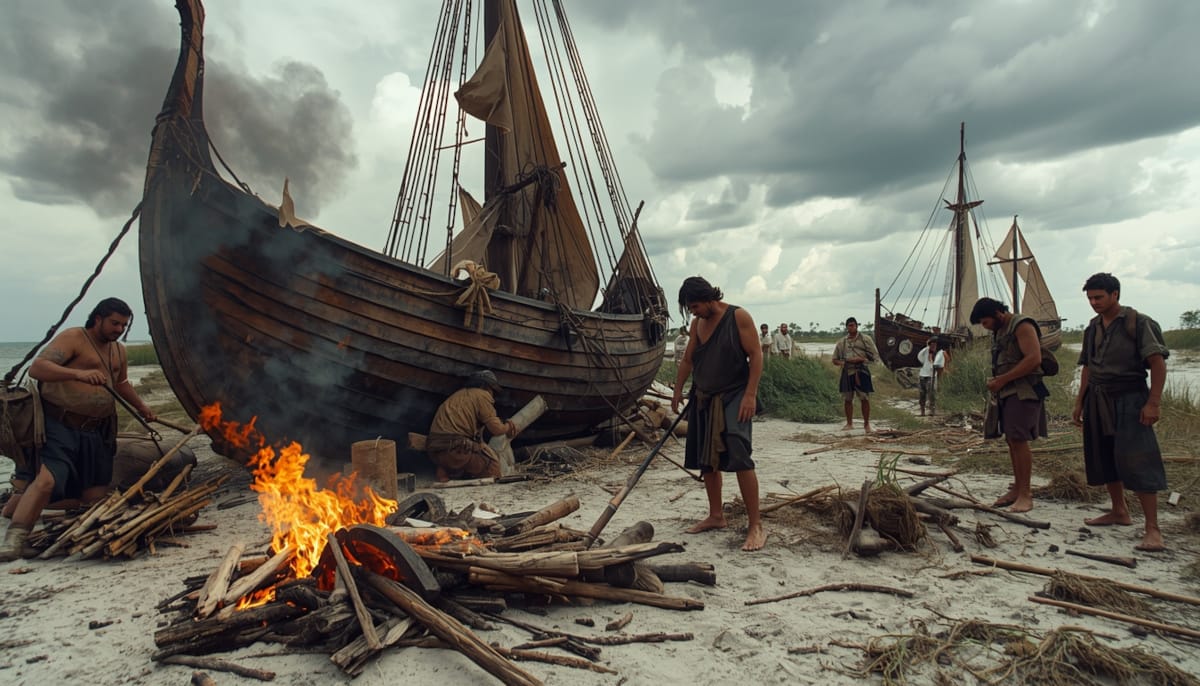
BAY OF HORSES, FLORIDA — September 22, 1528.
The expedition of Governor Pánfilo de Narváez has today executed one of the most astonishing strategic pivots in the history of global exploration. Trapped in the hostile geography of Florida, with the supply chain completely severed and a third of the workforce sidelined by disease, the 300 remaining men faced a total collapse of operations. Yet, instead of succumbing to panic, the management team —led by treasurer Álvar Núñez Cabeza de Vaca— has implemented a disruptive solution: to build an evacuation fleet from scratch, without shipyards, without engineers, and without materials.
The "Bootstrapping" of Survival
Barely fifty days ago, the situation at the Aute camp was untenable. The horses could scarcely carry the sick, and team morale was at an all-time low. A group of gentlemen proposed an unauthorized spin-off: to desert and seek salvation on their own. It was then that the strict discipline and statesmanship of the Empire intervened. Cabeza de Vaca and the officers reminded the dissenters of their contractual duty to His Majesty, managing to realign the entire staff under a single objective: to survive as one solid block.
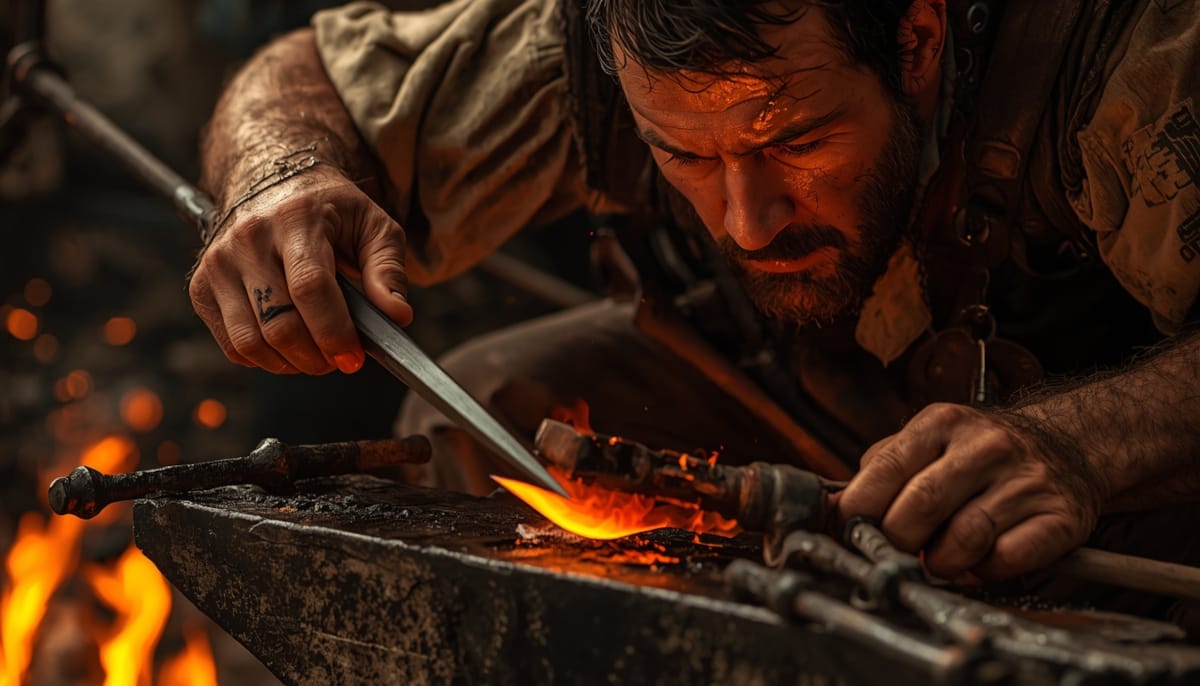
But the harsh reality of the inventory was terrifying. "We knew not how to build ships, nor had we tools, nor iron, nor forge, nor tow, nor pitch, nor rigging," the official report recounts. The solution came through an improvised crowdsourcing session. One member of the company proposed a rudimentary yet functional engineering design: to fashion wooden pipes and use deer hides to create the bellows of a forge. Florida's first R&D center had been born.
Hardware Upgrade: From Weapons to Tools
With the forge operational, the expedition proceeded to a massive recycling of its military hardware. In a display of guerrilla engineering, the stirrups, the spurs, and even the prized crossbows were melted down and forged anew. The military iron was transformed into the civilian infrastructure they needed: nails, saws, axes, and other carpentry tools.
Human capital also had to be reassigned. Of the 300 men, only one had prior experience as a carpenter. This single specialist technician took over as works director, while the rest of the staff, from the high officers down to the rank-and-file soldiers, labored as construction hands.
Disruptive Materials and an Alternative Supply Chain
Solving the shortage of assembly materials required innovations that naval engineers would study today. To caulk the vessels and prevent leaks, they used the fiber of the local palmettos, twisting and dressing it as a substitute for traditional tow.
The problem of the pitch needed to waterproof the hulls was solved by an external specialist, a Greek named Don Teodoro, who applied his knowledge of basic chemistry to extract a tar resin from the area's pines.
But the logistical ingenuity did not stop there. The ropes and rigging, critical elements for navigation, were made by braiding the manes and tails of the horses. And the sails? In an act of utter selflessness, the soldiers handed over the very clothes off their backs. The Europeans' shirts were stitched together to catch the winds of the Gulf of Mexico. For the storage of fresh water, the legs of the horses were skinned whole and the hides cured to turn them into watertight skins.
Resource Management: The "Horse as a Service" Model
While the shipyard ran at full capacity, managing the food chain became the central pillar of the project. Four high-risk tactical raids were organized against the village of Aute, succeeding in extracting more than 400 bushels of maize under continuous enemy fire.
To maintain the caloric intake of the builders and the sick, a strict rationing system was implemented. Every three days, one of the valuable cavalry horses was slaughtered. Its meat was distributed with accountant's precision among the workers and the convalescent. Today, September 22, the last horse has been consumed, marking the exact completion of the construction project. In honor of this logistical sacrifice, the launch site has been christened the "Bay of Horses."
The Fleet "Rollout"
In a record span of less than 50 days (from August 4 to September 22), this improvised naval factory has launched five barges, each 22 cubits in length. Rowed with hand-carved savin wood, these vessels represent the triumph of Spanish administration and bureaucracy over the chaos of the unknown.
Today, the 242 survivors (more than 40 succumbed to disease and hunger, and a dozen fell victim to hostile snipers while gathering shellfish) have embarked. The cargo is so heavy and the space so cramped that the boats sail with barely a span (the distance between thumb and index finger) of freeboard above the waterline. The men are literally immobilized, shoulder to shoulder.
None of the crew is an expert in navigation; there are no seasoned pilots and no nautical charts. And yet, the expedition ventures into the waters of the Gulf with the morale of those who have conquered nature through technique, order, and unbreakable discipline. The global network of the Hispanic world does not surrender; it simply pivots and sails toward its next destination.
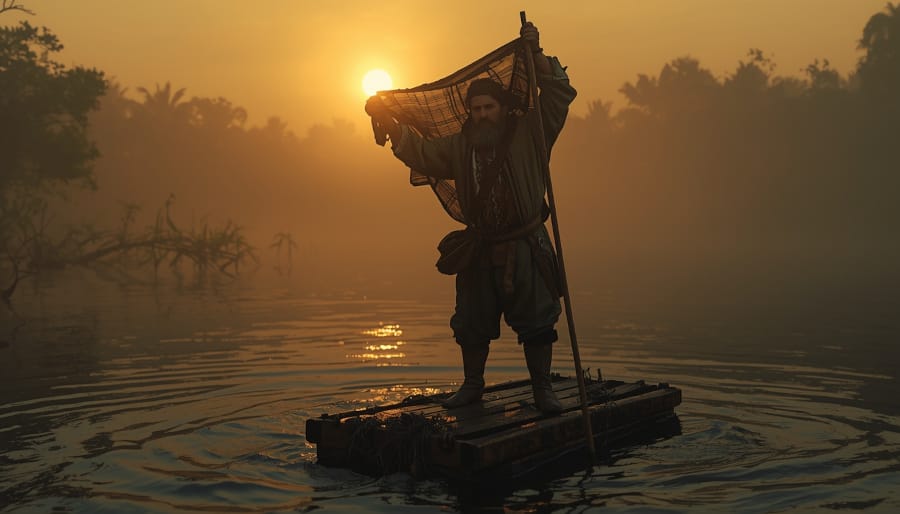
"Castaway Express" DIY Kit
Has your expedition failed? Turn your boots into a canteen and your shirt into a sail. Easy, fast DIY conquest!
* Donation to the Pultsar News project

Comentarios ()