
FEATURE | The Silver "Silicon Valley": Potosí Completes Its Largest Underground Infrastructure Upgrade
April 11, 1585
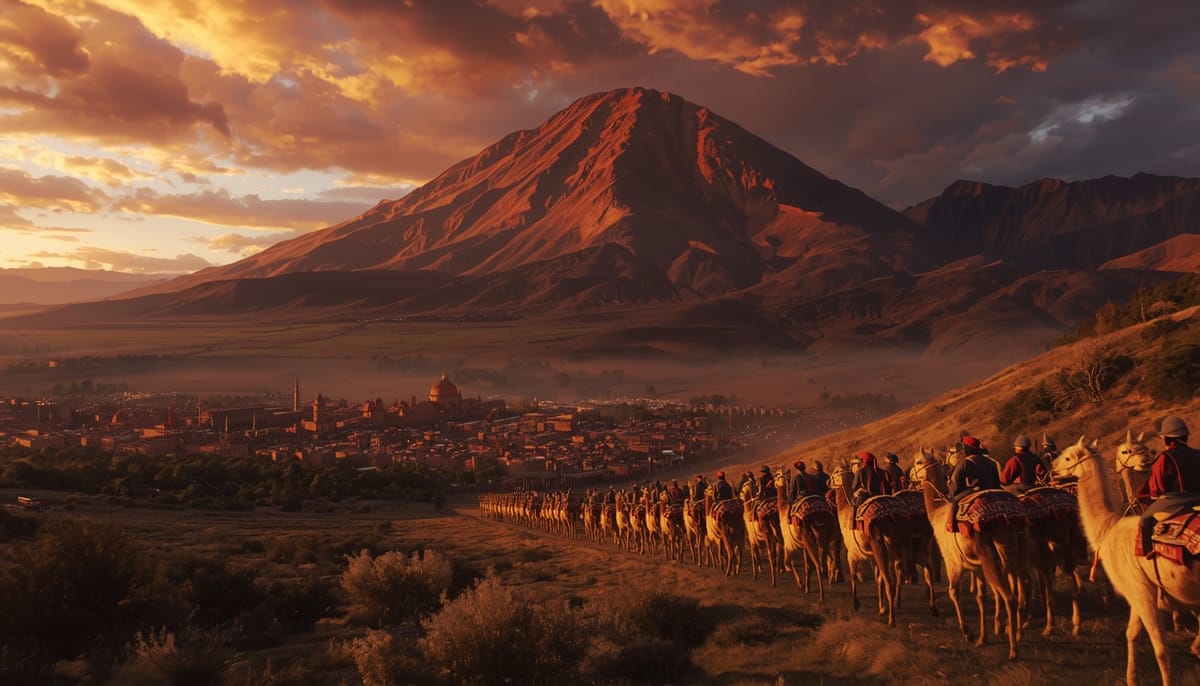
More than four thousand meters above sea level, where oxygen is a luxury and the cold scorches the grass, the Spanish Empire has consolidated the largest financial and industrial hub on the planet. Today, April 11, 1585, imperial engineering celebrates an unprecedented milestone: the completion of the "Socavón del Venino," a tunnel of direct access to the bowels of the Cerro Rico of Potosí that has taken twenty-nine years to bore.
While in Europe the nations bleed themselves dry over scraps of barren land, in the province of Charcas (Peru), the Hispanic administration has transformed a desolate wasteland, where "neither fruit, nor grain, nor grass is produced," into a thriving metropolis. All thanks to a global logistics network, a revolutionary upgrade in chemical processing, and an autonomous transport system that would leave any Venetian merchant slack-jawed.
The "Startup" of Gualpa and the Guanca
The story of Potosí has all the hallmarks of a modern startup. Until barely forty years ago, the red, sugarloaf-shaped peak was ignored by the Incas. According to our agency's records, the discovery occurred in 1545 when an Indian named Gualpa, chasing deer, clung to a branch to keep from falling. The root gave way, revealing a vein of silver so pure it looked like frost.
Gualpa tried to keep a monopoly on his discovery, operating in secret. But, as in every emerging venture, he needed a partner. He teamed up with a Guanca Indian, who soon noticed that Gualpa's profit margins were unusually high. Disputes between the founders were not long in coming. The Guanca, unhappy with his stake in the "Veta Rica," leaked the information to his employer, the Spaniard Villarroel. On April 21, 1545, Villarroel and the Guanca officially registered the mine. The Potosí giant had been born.
Hardware Upgrade: From the "Guayras" to the Socavón
During the early years, processing the ore relied on local technology: the guayras. These small smelting furnaces, driven by the icy Andean winds, lit up the slopes of the peak at night like a swarm of fireflies. Yet this legacy system was profitable only with metals of the highest purity (up to 250 pesos per quintal). The "poor" metal was piled onto slag heaps, considered industrial garbage.
As the mines went deeper—some today exceed 200 estados in depth—extraction costs soared. Spanish engineering's solution was heavy hardware: the adits, or socavones. The newly inaugurated Socavón del Venino, with its 250 varas of length, lets miners enter and haul out the ore on level ground, dodging the terrifying cowhide ladders up which the laborers climbed in the dark, candles tied to their thumbs, carrying two arrobas of metal on their backs.
Patch 2.0: The Chemical Revolution of Quicksilver
But the true disruption arrived in 1571, when Pedro Fernández de Velasco imported from Mexico the definitive "patch" for silver processing: amalgamation with quicksilver (mercury).
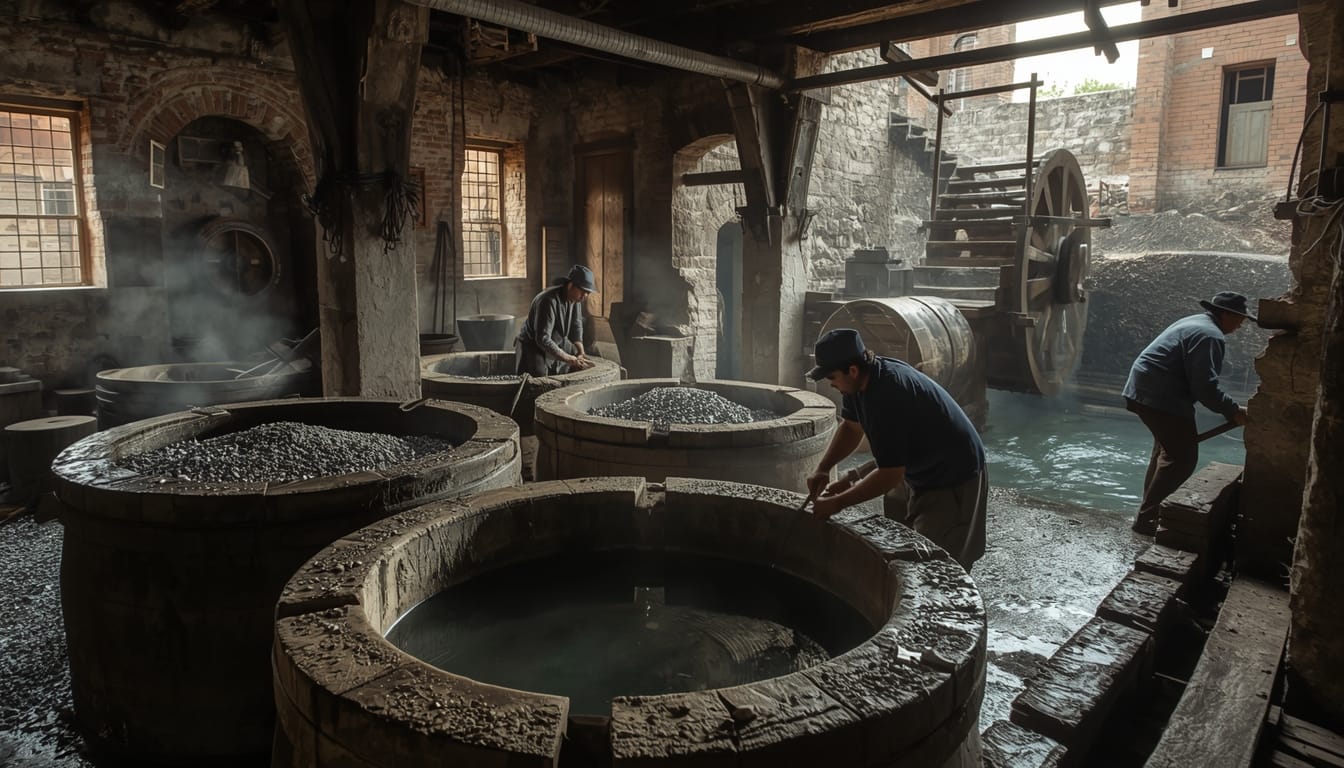
Quicksilver, extracted from the immensely rich mines of Huancavelica, acts as a liquid magnet. The process is a masterpiece of industrial chemistry. The ore is crushed in vast ingenios (mills) driven by hydraulic power. To guarantee the energy supply, the administration has built an astonishing cooling and flow system: seven artificial, interconnected lagoons with sluice gates that feed 48 water-powered mills day and night.
Once ground and sifted through wire-mesh screens, the rock powder is mixed in "buitrones" with brine and quicksilver. The mercury embraces the silver, ignoring the dross. After washing it in vats, the amalgam is wrung out in Holland cloths and subjected to fire beneath clay hoods. The quicksilver evaporates and is recovered, leaving behind cones of purest silver, of an assay that never dips below 2,380 points. Thanks to this innovation, the mountains of "garbage" from the early years have turned into millions of pesos.
Autonomous Logistics and the Pax Hispanica
All this extraction machinery would be useless without a supply chain capable of moving the product toward global markets. This is where Hispanic logistics shines, using the local transport model: the "sheep of the land," or llama.
These autonomous biological vehicles require no shoeing, no saddles, no barley. They feed on the pasture they find along the route and endure the extreme cold of the punas. The droves, herding between 500 and 1,000 llamas, carry the quicksilver from the coast up to Potosí, and bring the silver down to the port of Arica, 70 leagues away.
The most astonishing thing for any European observer is the security of this network. Herds laden with thousands of silver bars—the equivalent of more than 300,000 ducats—sleep in the middle of the open countryside, watched over by only a handful of Indigenous drovers and, at most, one Spaniard. There are no armies escorting the treasure, no fortresses along the road. The Pax Hispanica ensures that, over so long a journey, "never a thing goes missing among so much silver." A bracing dose of administrative reality against the fables of chaos and barbarism that the pamphleteers of northern Europe are trying to peddle.
The Balance Sheet of the Casa de Contratación
The figures audited by Viceroy Don Francisco de Toledo are dizzying. By 1574, Potosí had injected 76 million pesos into the global economy. From then until today, another 35 million have been added. We are talking about 111 million assayed pesos (at 13 reales and a quartillo each) that have passed through the strict oversight of the "Royal Fifth," not counting the immense quantity of unregistered silver in circulation.
The Cerro Rico is not merely a mountain; it is the financial heart pumping liquidity into the veins of world commerce, connecting for the first time in history Europe, America and—through the Manila Galleon—the distant Philippines and China. While other empires devote themselves to coastal piracy, Spain builds artificial lagoons, bores through mountains for decades, and organizes global trade. Potosí is no miracle; it is pure, hard imperial engineering.
STILL USING IRON? HOW COMMON OF YOU...
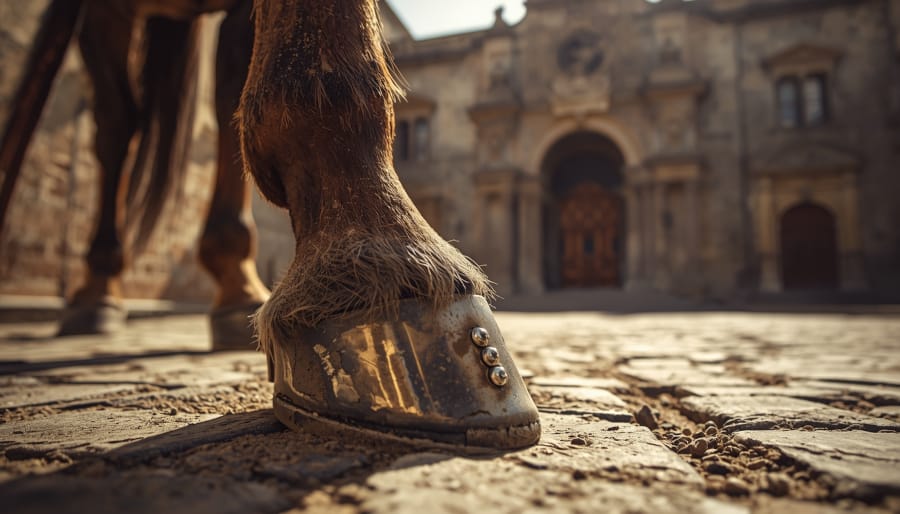
While in London they throw you into a workhouse, in Potosí we have so much metal to spare that we lay it beneath our horses' hooves. Join the network that raises hospitals and universities with the gleam of the Cerro Rico.
* Donation for the Pultsar News project


Comentarios ()