
FEATURE: Shipyards in the Mountains: The Modular Naval 'Hardware' that Sentenced Tenochtitlan
MAY 1521
After the collapse of the system and the tragic game over that was the Noche Triste, Hernán Cortés and his men found themselves in Tlaxcala licking their wounds. The situation was critical: Tenochtitlan, the capital of the Mexica empire, was an island fortress, impregnable to a purely land-based force. The Mexica controlled the lagoon with thousands of canoes, a monopoly on mobility that rendered any traditional siege useless. The solution? If you cannot walk on water, build naval hardware that masters it.
But there was a small logistical problem: the nearest ocean lay hundreds of kilometers away, and the Aztec capital rose more than 2,200 meters above sea level. The Spanish administration's answer to this challenge is, without a doubt, one of the most fascinating engineering and supply-chain operations of the sixteenth century, a milestone that dismantles any myth of barbarous improvisation and demonstrates planning worthy of the finest modern corporation.
The System's Architect: Martín López and the Tlaxcalan 'Joint Venture'
To dominate Lake Texcoco, Cortés did not order ordinary ships, but thirteen brigantines of modular design. The director of this engineering project was Martín López, a master shipwright who today would hold the post of Chief Technology Officer in any elite shipyard.
López established his base of operations in the forests of Tlaxcala. There, with the help of an old, lame carpenter named Ramírez and the sawyer Diego Hernández, he began to fell, hew, and number every timber. Each piece was meticulously calculated and marked with its corresponding sign so that, once transported, it would fit together perfectly, a plug and play assembly system ahead of its time.
But wood alone does not float. Iron, oakum, anchors, and sails were needed. Here "reverse logistics" came into play. Cortés dispatched Santa Cruz, a diligent magistrate, to the Villa Rica de la Veracruz. His mission: to break up the remains of the ships that Cortés had run aground (not burned) months earlier. All the heavy hardware, including the kettles, was recovered and transported on the backs of more than a thousand indigenous tamemes (porters).
There was even the need to innovate on the fly. Since the indigenous people were unfamiliar with making the pitch (tar) needed to caulk the hulls, Cortés sent four Spanish sailors to the pine forests of Huejotzingo to distill it in situ. The Spanish logistical machinery was running at full capacity, integrating local resources with European technology.
The Supply Chain: 8,000 Men and a Wounded Pride
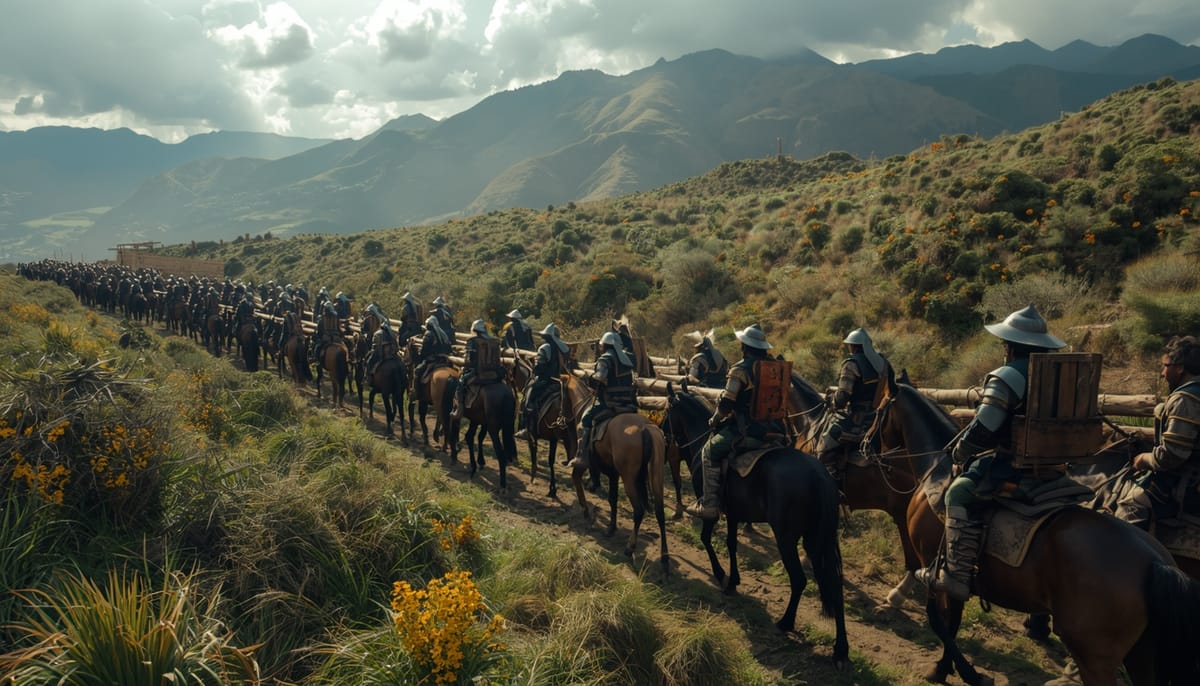
Once the pieces had been manufactured and numbered in Tlaxcala, the challenge was to transport them to Texcoco, on the lake's edge, crossing hostile territory. The transport operation was monumental. Eight thousand Tlaxcalan warriors carried the planking and timbers on their backs. Another two thousand were charged exclusively with catering (provisions), and an escort of thousands of armed warriors protected the convoy.
Command of this escort fell to the young and brilliant captain Gonzalo de Sandoval. During the march, Sandoval demonstrated not only tactical skill but also a keen intelligence in human resources. The Tlaxcalan general, the valiant Chichimecatecle, rode in the vanguard. Sandoval, knowing that the Mexica tended to attack the baggage train from the rear, ordered him to move to the back. The chieftain took deep offense, believing his courage was being questioned. Sandoval, with great tact, explained to him that the rearguard was the post of greatest honor and danger, and to prove it, rode at his side. The ally's pride was restored and the alliance strengthened.
The convoy's entry into Texcoco lasted more than six hours. The Tlaxcalans marched with their plumes and banners of the white eagle, to the beat of drums and horns, shouting: "Castile, Castile, and Tlaxcala, Tlaxcala!" It was a parade of logistical power that left the region's inhabitants astonished.
Hydraulic Engineering: The Texcoco Canal
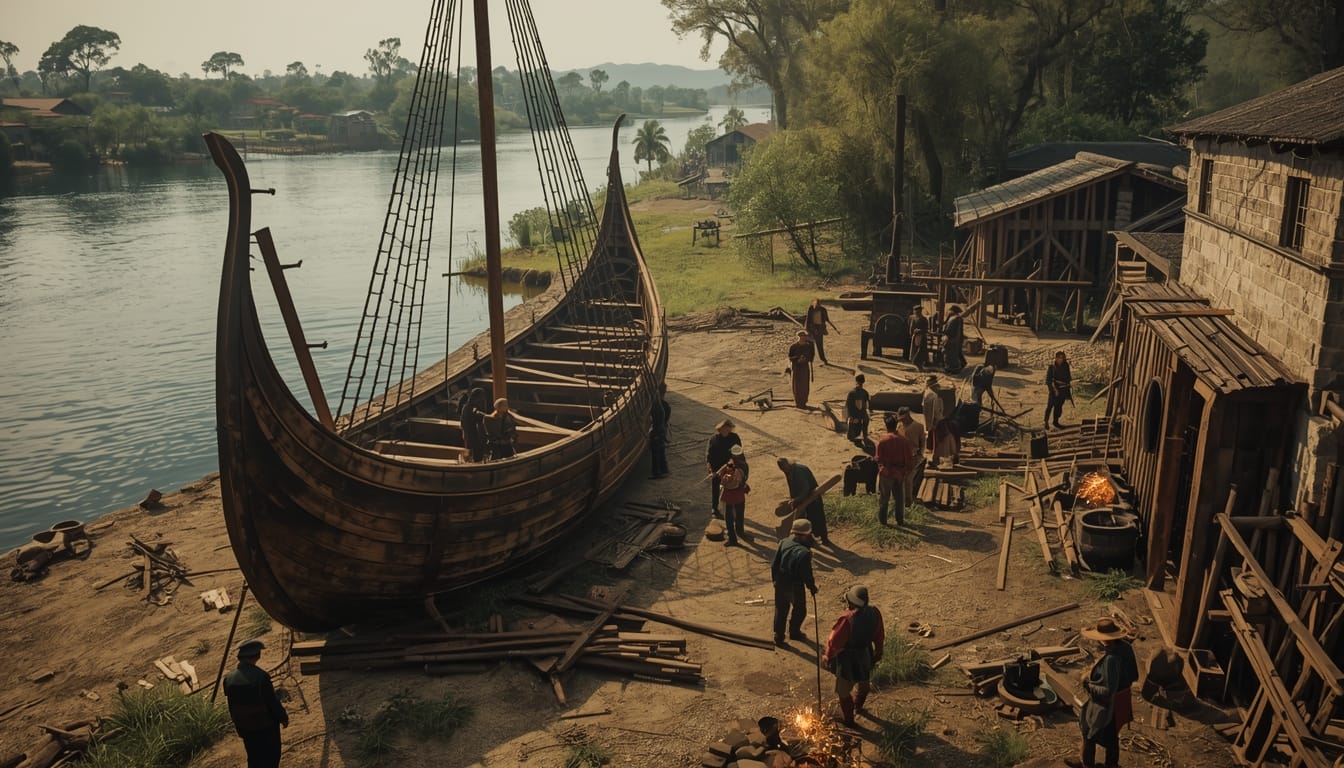
Having the ships in Texcoco was not enough; they had to be safely launched onto the lagoon. To this end, a colossal feat of hydraulic engineering was carried out. For weeks, eight thousand natives worked daily, widening and deepening a ditch and channel that connected the city to the lake.
A canal was built deep and wide enough for vessels of reasonable size to navigate it. Locks were installed and the banks fortified. When the thirteen brigantines were finally assembled, caulked, and armed, the canal was ready.
The Launch and the Mastery of the Lake
On April 28, 1521, after a solemn Mass officiated by Father Juan Díaz, the thirteen brigantines were launched into the water. Each vessel carried a crew of twenty-five men: twelve oarsmen (six per side), twelve crossbowmen or harquebusiers, and a captain, in addition to light artillery (falconets). Cortés had to compel many hidalgos, under severe penalties, to take up the oars, proving that in war usefulness prevails over titles.
The technological impact was immediate and devastating. In the first great naval engagement, thousands of Mexica canoes attempted to surround the Spanish fleet. Cortés, waiting patiently for the land breeze to blow, ordered the sails hoisted. The brigantines, driven by wind and oars, charged and shattered the enemy fleet. The submerged stakes the Mexica had laid as traps were broken by the brute force of the Spanish keels.
Tenochtitlan's monopoly over the water was over. The brigantines severed the supply lines, isolated the city, and provided mobile artillery support to the land troops advancing along the causeways. The fall of the Aztec empire was not merely a victory of steel and gunpowder, but the absolute triumph of Spanish engineering, diplomacy, and logistics.
"Plus Ultra" Kingdom Management Kit (1521 Edition)
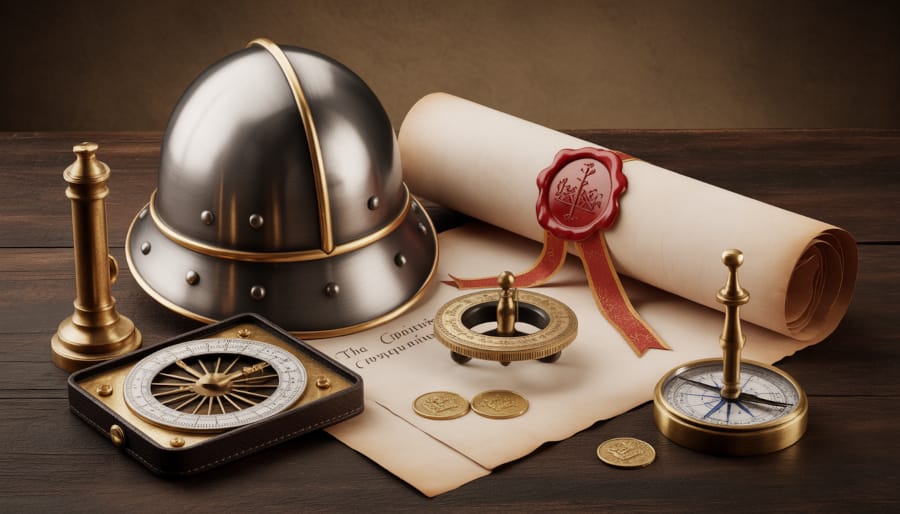
Tired of the world feeling too small for you? Become an official Adelantado of the Crown. Includes: a brass Astrolabe (works better than GPS on the high seas), a polished steel Morion helmet, and a copy of the "Requerimiento" written in Latin so dense it will grant you the legal upper hand before you even disembark. Glory or shipwreck guaranteed! 200 Gold Ducats (Payable after the first expedition)
* Donation to the Pultsar News project


Comentarios ()