
FEATURE: Debunking the "Noble Savage" Myth: Our Ancestors Ran a 'Dual-Boot' of Their Social Systems
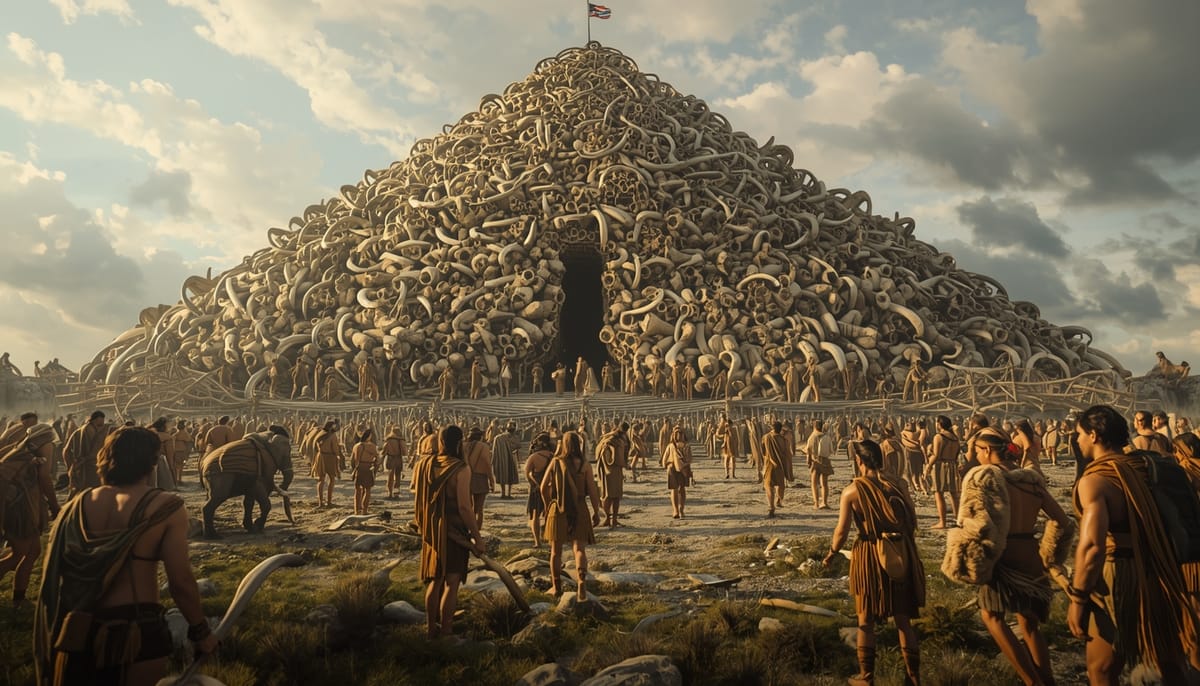
c. 30,000 - 10,000 B.C. (Late Pleistocene)
Switch on the television or read any modern armchair philosopher, and they will sell you one of two versions of our past. Either we were violent apes trapped in a state of perpetual war (the Thomas Hobbes version), or we were innocent foraging hippies sharing berries in egalitarian communes until someone invented agriculture and ruined everything (the Jean-Jacques Rousseau version).
From the CavePress newsroom we have an urgent message for the academic community: both versions are a bug in our historical understanding.
The most recent archaeological evidence, gathered by researchers who have finally decided to look at the data instead of their own prejudices, proves that our Ice Age ancestors were neither brutes nor innocent children. They were fully conscious political actors. In fact, they possessed an institutional flexibility that would make us envious today. For tens of thousands of years, humanity ran a social "Dual-Boot" system: they installed dictatorships in winter and anarchist communes in summer.
The Monumental "Hardware" of the Hunter-Gatherers
For decades, the academic consensus held that to build great monuments you needed a State, bureaucrats, whips, and, above all, agriculture. Yet the hunter-gatherers of the Pleistocene and early Holocene left us a fossil record that demolishes this theory.
Take Göbekli Tepe, in present-day Turkey (c. 9000 B.C.). Long before anyone thought to domesticate an ear of wheat, bands of hunters coordinated to carve and raise stone pillars up to 16 feet tall and several tons in weight, decorated with terrifying reliefs of predators. Göbekli Tepe was no mere campsite; it was a central ritual-processing server. It demanded impeccable logistics to feed and organize thousands of seasonal workers.
And it was not an isolated case. On the frozen steppes of Russia and Ukraine, at sites such as Yudinovo or Mezhirich, our ancestors built enormous complexes using hundreds of mammoth bones and tusks. These were not simple "huts" to shelter from the cold; they were public monuments, markers on the landscape that commemorated epic hunts. All of this was achieved by people who had no permanent kings and no standing armies.
Social Dual-Boot: Hierarchs in Winter, Anarchists in Summer
How did they organize such logistical feats without an oppressive State? The answer is seasonality. Our ancestors' genius lay in their capacity to switch their social operating system according to the time of year.
Anthropology has shown us that more recent foraging societies, such as the Inuit of the Arctic or the indigenous peoples of the North American Great Plains, alternated their political structures. The Cheyenne or the Lakota, for example, appointed a police force with absolute coercive powers (including the right to flog or execute) during the buffalo-hunting season in late summer. But once the hunt and its subsequent rituals were over, that temporary "State" dissolved entirely. The generals became ordinary citizens again, and society fragmented into small bands with no coercive authority.
The evidence suggests that in the Ice Age we did exactly the same. We built massive hierarchies for specific projects (hunting mammoths, raising stone temples, holding festivals) and then, quite simply, uninstalled them. The first kings were, in essence, kings of the season. Toy kings. The trouble, historically speaking, came when we forgot we were playing and left the kings on the throne all year round.
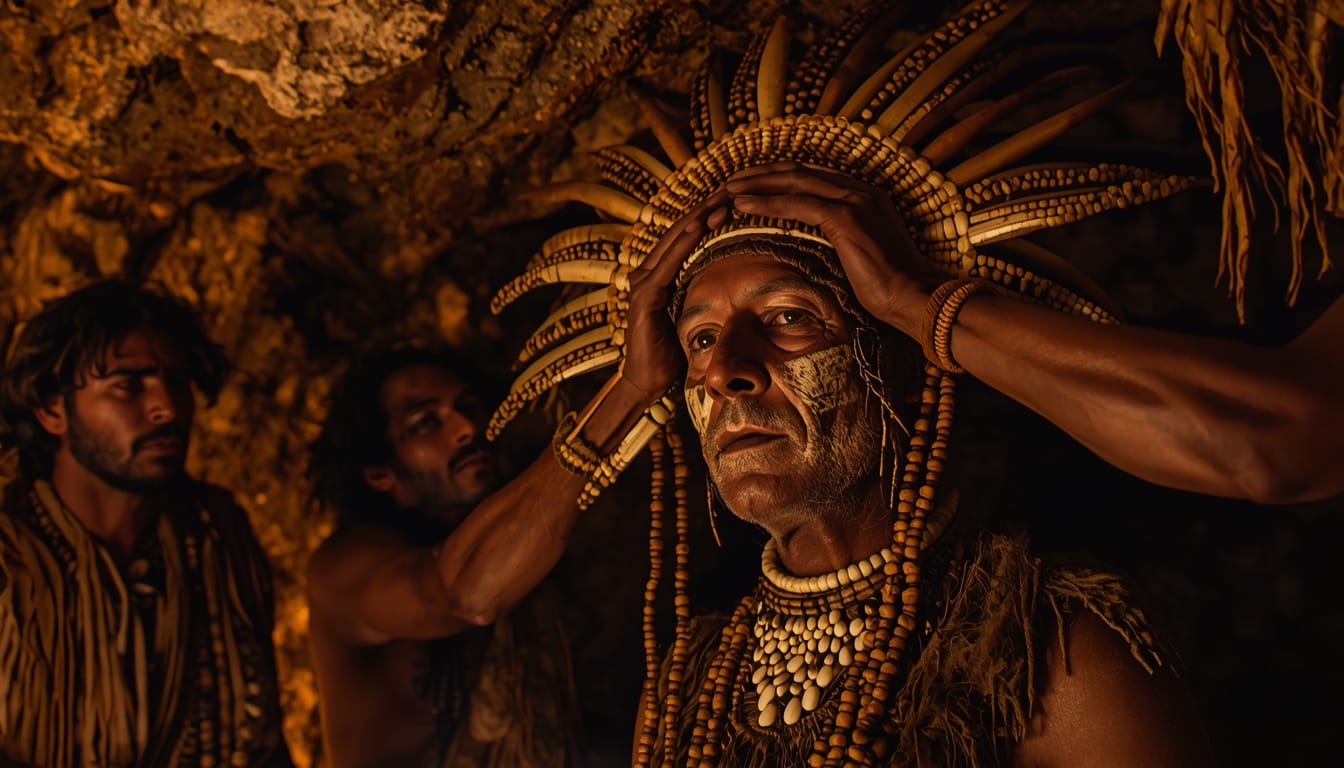
Pleistocene Influencers: The Anomalous Princes
If you think class inequality was born with private ownership of land, the burials of the Upper Paleolithic have something to say to you. At sites such as Sunghir (Russia) or Dolní Věstonice (Czech Republic), archaeologists have unearthed 30,000-year-old graves that would make a pharaoh blush.
Individuals buried with thousands of mammoth-ivory beads, straightened spears, and exotic headdresses. The fascinating thing about these Ice Age "princes" is that, statistically, a great many of them displayed extreme physical anomalies: dwarfism, gigantism, or congenital deformities. Rather than being cast out, these "extreme" individuals were treated as deities or living talismans. They were the original influencers, amassing immense social and ritual capital. Yet this wealth did not translate into permanent dynastic power. Upon death, their wealth was buried with them, taking it out of circulation and resetting the economic system.
Agriculture: A Beta Version That Took 3,000 Years to Compile
The last great myth we must uninstall is that of the "Agricultural Revolution." We have been told that humanity discovered how to plant seeds and, immediately, rushed to chain itself to the land, inventing private property and taxes.
False. Modern archaeobotany proves that in the Fertile Crescent, the process from the moment we began tinkering with wild cereals to the point at which they were biologically domesticated took some 3,000 years. That is not a revolution; it is a hobby.
Our ancestors practiced what we might call play farming. They planted seeds on the floodplains when the rivers receded, a method that required no deforestation, no plows, and no strict private property. They kept their diets rich and varied by hunting and gathering. They knew perfectly well that depending on a single crop was a logistical trap that demanded exhausting labor. They kept agriculture in the Beta phase for millennia precisely to preserve their freedom.
Conclusion: The Three Lost Freedoms
The story of prehistory is not one of a fall from Eden, but the story of how we gradually lost three fundamental freedoms that our ancestors took for granted:
- The freedom to move away and abandon one's own surroundings.
- The freedom to ignore or disobey arbitrary commands.
- The freedom to create and transform new social realities.
Our prehistoric forebears were neither stupid nor simple. They were social engineers who designed continental logistical networks and experimented with every conceivable form of government. The real question we must ask ourselves today is not what the origins of inequality are, but rather how, with such flexible software at our disposal, we ended up stuck in a single operating system.
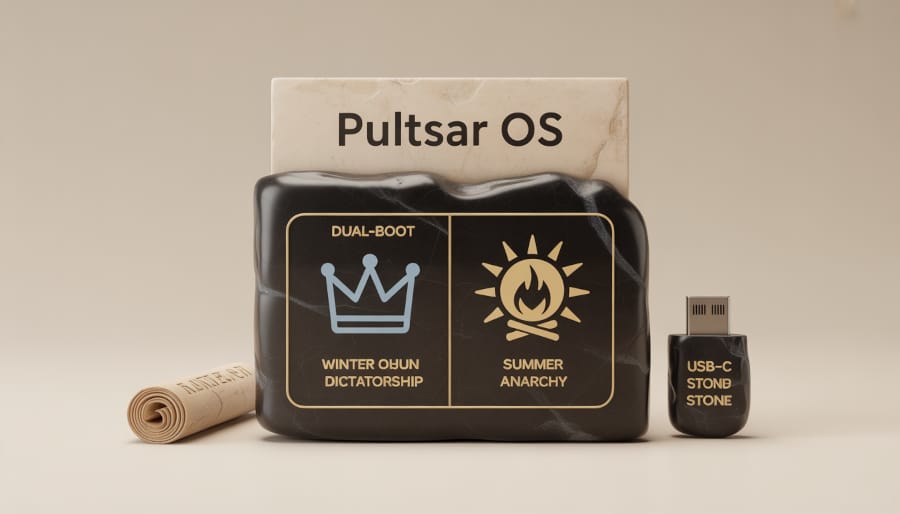
Social OS "Dual-Boot" v.Paleolithic
Tired of putting up with the same boss all year long? Install our ancestral operating system. Alternate between an Iron-Fisted Dictatorship in winter (ideal for moving 5-ton boulders) and a Hippie Anarchy in summer. Includes the "Play Farming" DLC for planting wheat purely for the laughs.
* Donation for the Pultsar News project


Comentarios ()