
FAREWELL, COPERNICUS! The Polish canon who pulled the Earth out of the center of the cosmos dies the very day his printed book is placed in his hands
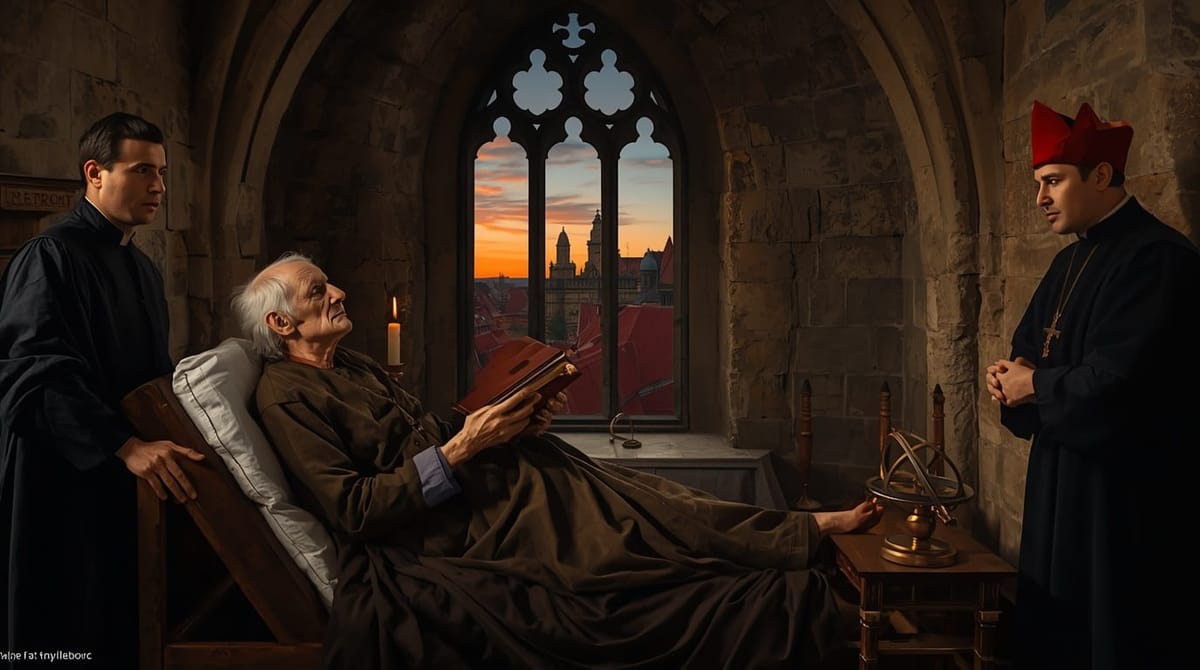
FROMBORK, CATHEDRAL HILL OF WARMIA, 24 MAY 1543 | FRIAR WILLIAM | 🏰 MEDIEVAL TODAY · FEUDAL TIMES
At the tenth hour of the afternoon, when the Baltic sun is already reddening the copper roofs of the cathedral of Saint Mary of Frombork, a courier gallops in through the south gate, saddlebags soaked with the rain of Pomerania and a parcel wrapped in waxed cloth under his arm. He carries eleven days' journey in his body and a single commission: to place that parcel in the hand of Doctor Nicolaus Copernicus, canon of this cathedral, without waiting for a reply.
The doctor has been semiconscious since dawn. December's apoplexy left the right half of his body paralyzed and his speech reduced to syllables; for the last fortnight he has not managed to hold a spoon. In the chamber of his tower, the one in the northwest corner—from whose balcony he has observed the planets for thirty years with a mural quadrant he built himself in yew wood—his friend the bishop Tiedemann Giese, who has ridden two days from Chełmno to arrive in time, orders the courier in without dismounting his cloak.
They open the parcel for him. Inside is an in folio volume of 405 pages, bound in fresh brown leather, its spine still smelling of fish glue. On the title page, in large roman type, it reads:
NICOLAI COPERNICI TORINENSIS DE REVOLVTIONIBVS ORBIVM COELESTIVM, Libri VI. NORIMBERGAE APUD IOH. PETREIUM. ANNO M. D. XLIII.
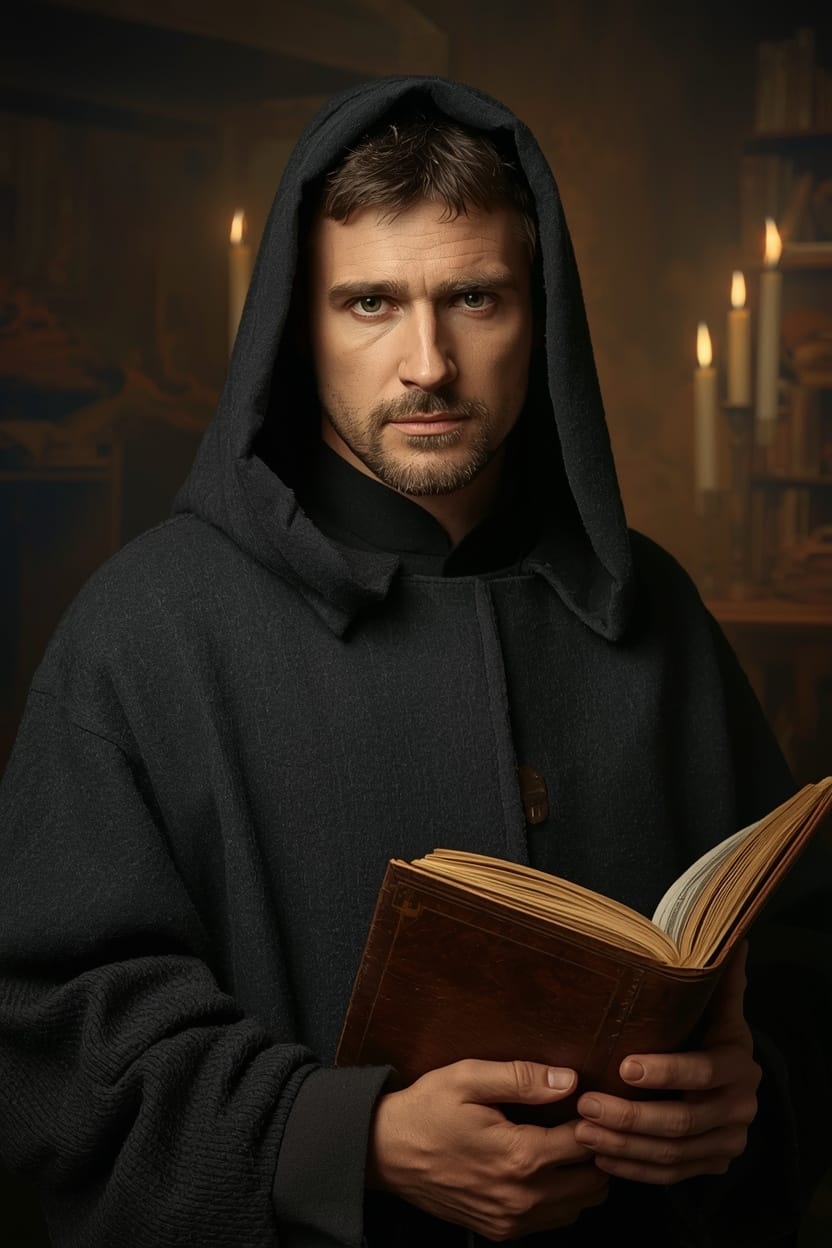
They lay the book on his chest. Copernicus, who can barely move his left hand, palpates it slowly—the spine, the title page, the gilt edge of the leaves. He closes his eyes. He does not open them again. Before twilight he is dead. He is seventy years and three months old.
Obituary: canon of Warmia since 1497
Mikołaj Kopernik was born in Toruń, in royal Polish Prussia, on 19 February 1473. His father a copper merchant, his mother of the Toruń patriciate. Orphaned at ten, he was raised by his maternal uncle Lucas Watzenrode, who would become bishop of Warmia and who paid for eighteen years of study in Kraków, Bologna, Padua and Ferrara: mathematics, canon law, medicine and, above all, the astronomy he learned reading Ptolemy in Latin and the Arab Al-Battani in a Toledan translation.
He returned to Warmia in 1503. His uncle made him a canon of this cathedral of Frombork—an administrative office for life, with a prebend, with no obligation to be ordained a priest—and entrusted him with the financial management of the bishoprics, the land survey after the war with the Teutonic Knights, the reform of the Prussian coinage (Monetae cudendae ratio, 1526), and free medical care for the poor of the chapter. He completed forty years as a canon without a single administrative scandal, which in this century of plundered bishoprics is already half a beatification.
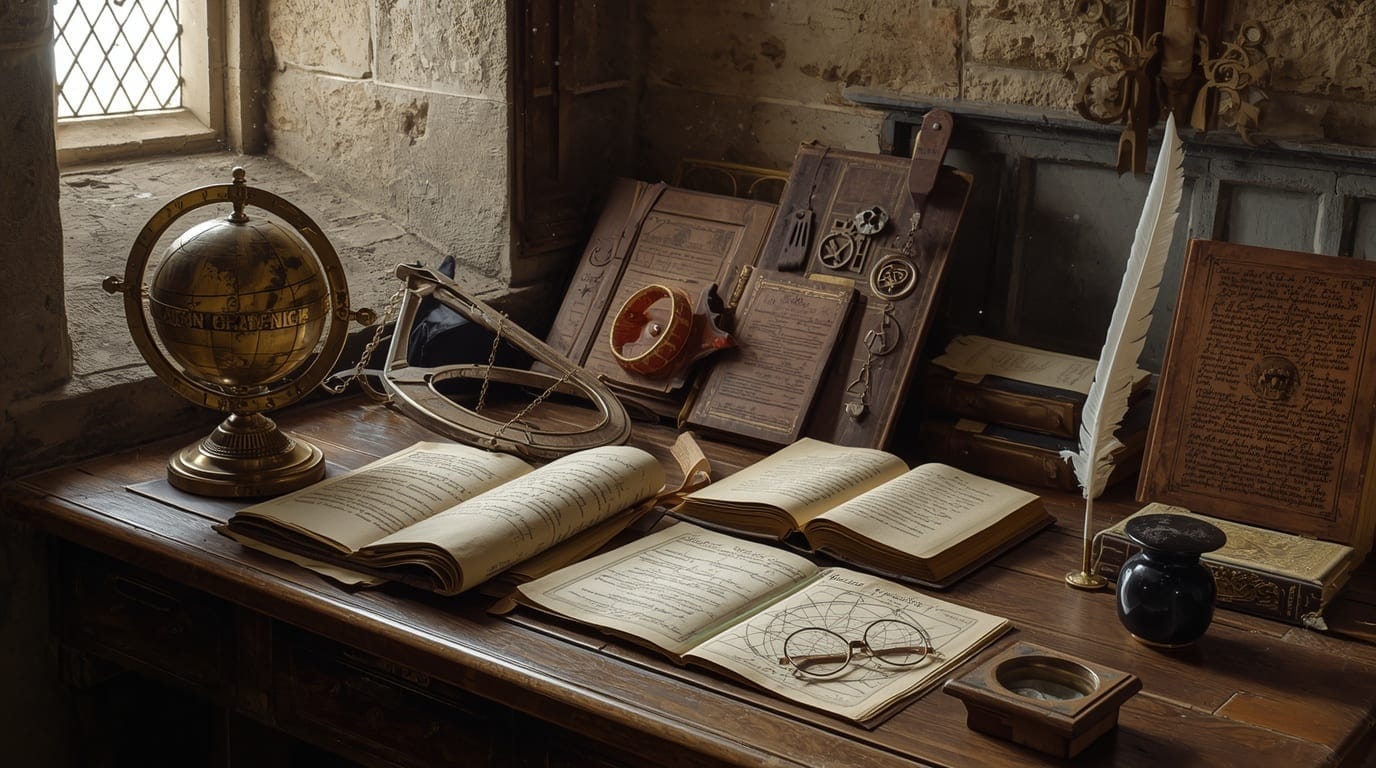
The astronomy he worked at by night, in the tower at the northwest corner of the cathedral walls. With no telescope—sixty-six years remain before Galileo points his own at Venus—with nothing but the naked eye, a quadrant and a sextant built by hand in his workshop, and calculations by quill on Alfonsine tables copied from the Kraków archive.
Science: what the book that arrived this evening says
The De Revolutionibus is a technical volume, dense, packed with tables of cosines and geometric diagrams. Most of its 405 pages are illegible to anyone who has not been through the university quadrivium. But in the first book, in chapters 5 to 11, Copernicus does something no Christian had dared to write in black on white since Aristarchus of Samos said it in Alexandria eighteen hundred years ago: he says that the Earth is not still at the center of the cosmos, but that it spins on itself every twenty-four hours and orbits the Sun every three hundred and sixty-five days.
The argument is mathematical, not theological. Copernicus complains that Ptolemy's system, in force since the second century, forces the planets to perform absurd pirouettes—the famous epicycles: little wheels within wheels—only so that their observed positions square with the theory. He places the Sun at the center and all the pirouettes evaporate: Mercury, Venus, the Earth, Mars, Jupiter, Saturn arrange themselves in clean circles, the orbits are calculated with fewer parameters, and in passing he explains at a stroke why Venus is always seen near the Sun (because it lies inside the Earth's orbit) and why Mars appears sometimes large and sometimes small (because sometimes the Earth overtakes it).
He proves nothing. He proposes. And he warns that the consequence is enormous: if the Earth moves, everything that the Bible, Aristotle, Saint Thomas and the very University of Paris take for granted about the heavens must be rewritten.
Church: the preface a Lutheran slipped in without permission to save the canon from the Holy Office
Here enters the sordid episode that this evening, with the dead man still warm, is already circulating among the canons of Frombork with faces of dismay.
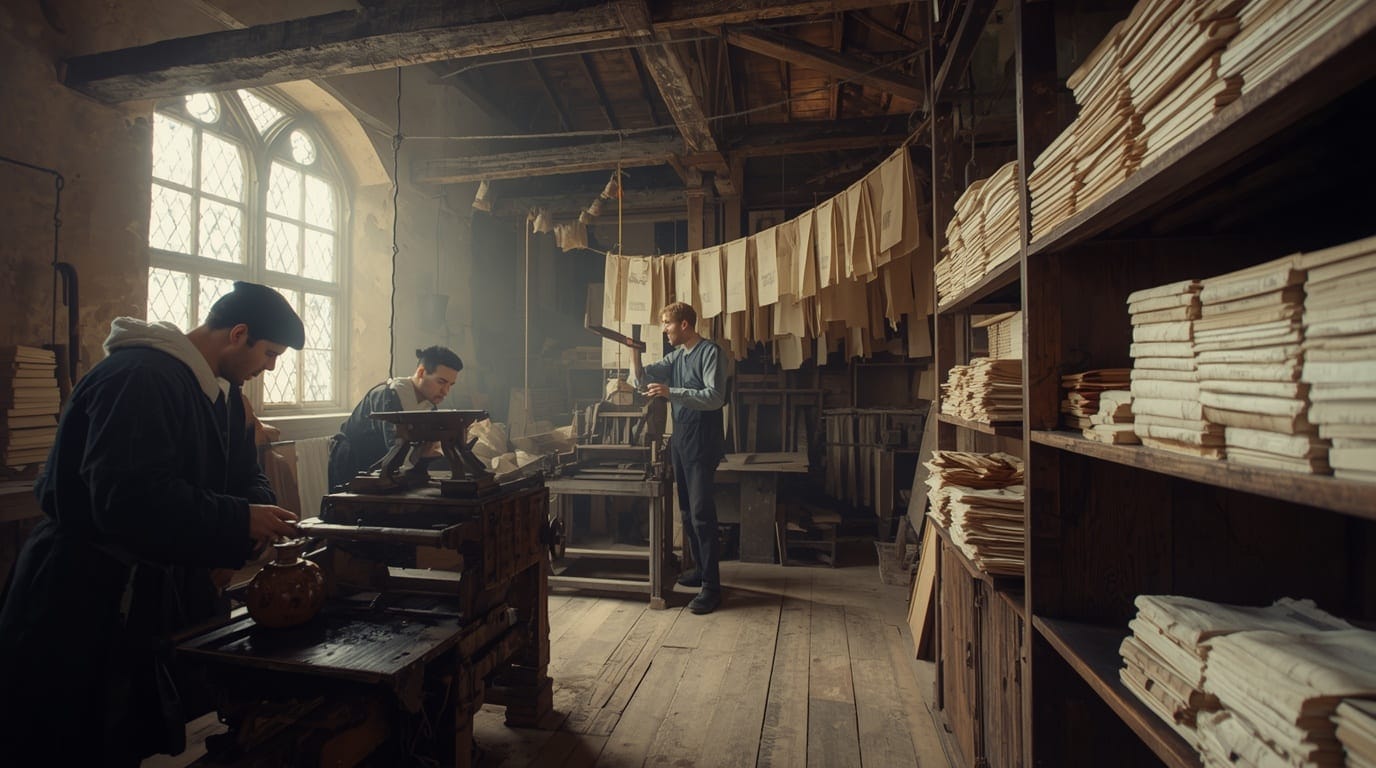
The book was carried to Petreius's press in Nuremberg by the only disciple Copernicus has had in forty years: Georg Joachim Rheticus, professor of mathematics in Wittenberg—yes, in Luther's very own university—who arrived in Frombork in 1539, at twenty-five, crossing half of Lutheran Europe only to meet the old Catholic canon whose theory he had heard whispered in Latin among mathematicians. Rheticus stayed three years. In 1540 he published on his own account a summary of the model (Narratio Prima) that circulated throughout Germany. He convinced Copernicus—who had spent thirty years postponing publication for fear of ridicule—to send the complete manuscript to print.
Rheticus took the manuscript to Nuremberg in 1541. He entrusted the supervision of the press to a local Lutheran theologian, Andreas Osiander, a friend of the printer Petreius. He then had to return to Leipzig in 1542 to take up a chair. Osiander, in his absence and without the permission of either Copernicus or Rheticus, added to the book an anonymous preface titled Ad lectorem in which the whole heliocentric theory is presented as a mere mathematical hypothesis with no claim to physical truth—“the astronomer does not seek true causes but only convenient calculations.” He signed it without a signature. He slipped it into the opening pages, before the very preface Copernicus had dedicated to Pope Paul III.
When the book reached the dying man's bedside this evening, the first to open it was bishop Giese. He opened it at the preface. He read it. He turned pale. He showed the text to Rheticus—who has ridden from Leipzig to attend his master—and Rheticus struck out Osiander's preface with a quill in Copernicus's personal copy, writing in the margin the Latin word FALSUM in capitals. But the canon, now without hearing or sight, had the book laid on his chest with nothing said to him. He died believing his work was going out into the world whole.
The Gossip: Anna Schilling, Bishop Dantiscus and the canon's other battle
Copernicus's intellectual career was not the only thing that cost him grief. The diocesan one did too.
The bishop of Warmia since 1537, Johannes Dantiscus, poet laureate of the emperor Maximilian and diplomat to half the world, had for years been reproaching Copernicus—by now in his seventies—for keeping under his roof a woman named Anna Schilling, widow of a Gdańsk merchant, officially his housekeeper. That the woman was moreover a distant relative of the canon on his mother's side was not enough for the bishop, who demanded in ever more incensed letters that he turn her out. “It is not fitting for a canon of my diocese,” Dantiscus wrote to him in 1539, “to share a dwelling with a woman of childbearing age, even if she is his kinswoman and her hair is already grey.” Copernicus, fed up, dismissed Anna in 1540 and sent her to live with relatives in Gdańsk. Dantiscus even forced him to sign a notarial deed never to receive her under his roof again.
The canons of Frombork, this evening, whisper in the cloister that the last letter Copernicus dictated—in March, before the second apoplexy—was addressed precisely to Anna Schilling, asking her to pray for him. No copy has been found. Bishop Dantiscus has ordered the writing desk examined.
On the other front—the Lutheran disciple—the diocese did not forgive him either. That Copernicus should accept as his only pupil a professor from Wittenberg, in the thick of the Reformation, was seen in Frombork as an imprudence bordering on complicity. Rheticus had to disguise his entry into the city. He lived three years in the canon's house presented as a “mathematician passing through.” And Bishop Dantiscus went so far as to forbid by edict the presence of Lutherans in the diocese in the very year Rheticus departed for Nuremberg with the manuscript.
The book that Copernicus has just died embracing has therefore come out written by a Catholic canon, carried to the press by a Lutheran, prefaced in secret by another Lutheran to protect it from the Catholic Holy Office, and printed by a Lutheran publisher in a free imperial city. Christendom split in two, this century, did not turn up its nose at an odd book so long as the book was good.
Reflection: what the canon never lived to hear
To this correspondent, who has covered the case since Rheticus's Narratio Prima and who left Chełmno ten days ago to reach the dying man's bedside, falls the task of noting the paradox with which this chronicle closes.
Copernicus has died believing two things that are not entirely true. The first, that his book went out into the world whole: no, it carries an apocryphal preface that for the next sixty years will allow half of Christendom to cite it as if it were a mathematical joke. The second, that the Church would receive it with curiosity: no, Pope Paul III—to whom he dedicated the preface—will never read it. Seventy-three years will have to pass before, in 1616, the Holy Office places the De Revolutionibus on the Index of Prohibited Books “until corrected,” and another hundred and forty-two until, in 1758, Benedict XIV lifts the ban.
But he has also died without hearing—and this much is justice—the ridicule with which his theory will begin by being received. Luther two years ago, in his Table Talk, called it “the madness of an amateur astrologer who wishes to turn the whole sky around”; Melanchthon said it was “contrary to Scripture and to decency.” Tycho Brahe, who will be born within three years, will propose a compromise model in which the Sun orbits the Earth and the other planets orbit the Sun—the geo-heliocentric model that spares half the clergy of Europe the embarrassment of changing sides.
And he has died without knowing the one thing that matters: that within fifty-seven years an Italian friar named Giordano Bruno will be burned alive in the Campo dei Fiori for defending—with less mathematical rigor and far more rhetorical recklessness—the consequences the De Revolutionibus implied. That within sixty-six a Florentine named Galileo Galilei will point a lens at the sky and see the moons of Jupiter turning around Jupiter, proving that not everything in the cosmos turns around the Earth. And that within ninety years that same Florentine will be forced to kneel in Rome and abjure Copernicus, in a ceremony that posterity will remember better than the first edition of the book this Polish canon has just died embracing.
At eleven at night, the servants take the book from the dead man's chest and set it on his worktable, open at the tenth chapter of the first book, on the page where Copernicus wrote, almost forty years before, this sentence that tomorrow everyone in Frombork who knows Latin will be quoting:
“In medio vero omnium residet Sol. Quis enim in hoc pulcherrimo templo lampadem hanc in alio vel meliori loco poneret, quam unde totum simul possit illuminare?”
(“In the middle of all things rests the Sun. For who, in this most beautiful temple, would place this lamp in any other or better spot than the one from which it can light up everything at once?”)
The canon no longer hears the silence of the tower. But the tower, this night, sounds different.
— Friar William, from the cathedral hill of Frombork.
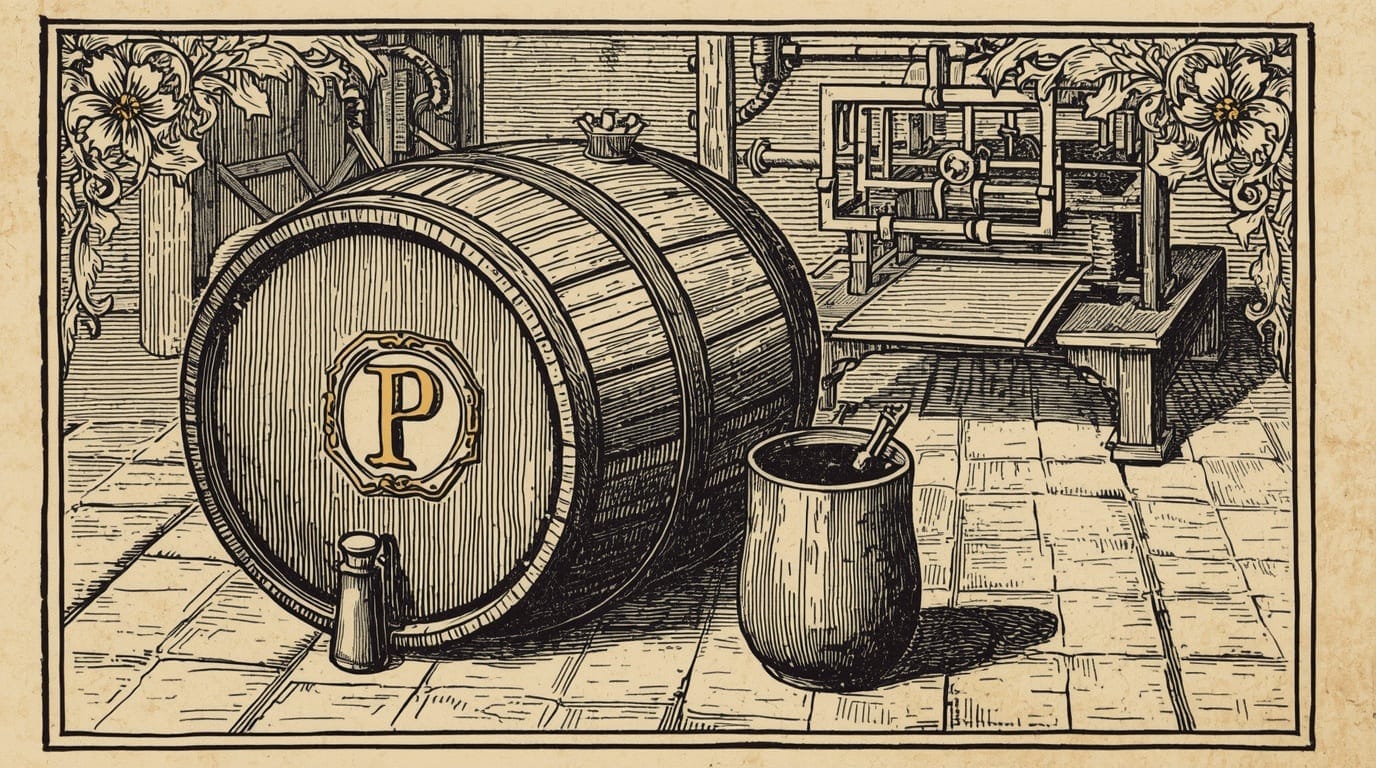
Petreius printing ink — Officina Norimbergensis
Are you printing heresies this spring?
The only ink in Christendom that withstands one heresy after another without losing its black or its sharpness. Tested by master Johannes Petreius on the first edition of canon Copernicus's De Revolutionibus (1543). It resists the roller, the Flemish rag paper and the reader's indignation. Guaranteed through the fifth Index of prohibited books. Exclusive distribution along the Danube route; oak barrel sealed with the printer's mark.
* Donation for the Pultsar News project

Comentarios ()