
Disruption in the textile sector: Richard Arkwright launches "Cromford Mill", the first automated cotton hub
August 1771
The freelance, decentralized model of work that has dominated the world economy for the past five thousand years has just become obsolete. Forget the peasant Home Office and the manual spinning wheels in the living room. True disruption has arrived in Derbyshire, and it promises to multiply the textile sector's productivity to levels that terrify the Asian competition.
The man behind this milestone is not an Oxford engineer, but Richard Arkwright, an entrepreneur from Preston who until recently operated in the personal-care sector as a barber and wig maker. Today, Arkwright is the CEO of Great Britain's most aggressive startup.
From the razor to Venture Capital
Arkwright's road to a textile monopoly is a textbook case study. After analyzing the bottlenecks in the cotton supply chain (weavers were always left waiting for yarn), Arkwright patented his Water Frame in 1769.
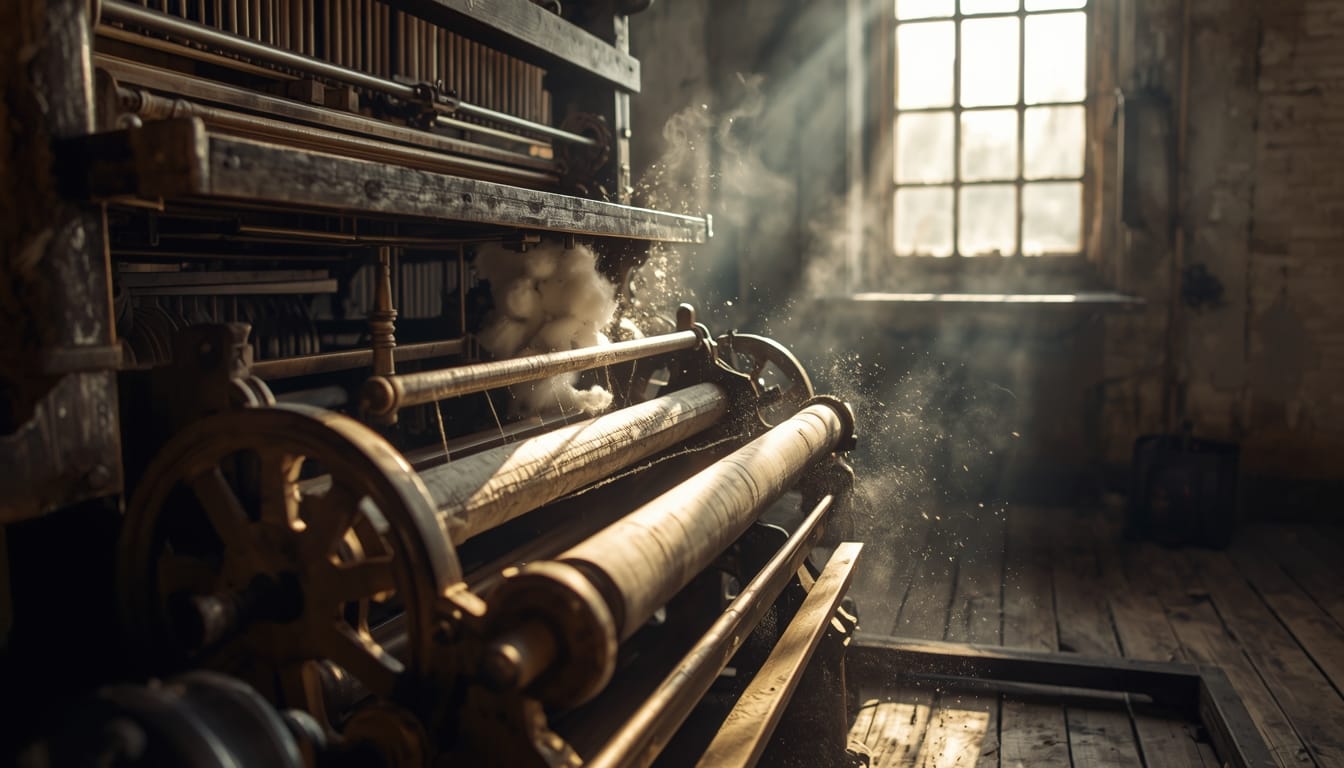
Unlike the Spinning Jenny by James Hargreaves—a fine killer app launched in 1764, but one that still required "blood traction" and muscular effort—Arkwright's hardware automates the drawing and twisting of the yarn by means of a system of rollers. The only problem? The machine is far too large and heavy for a freelancer's living room.
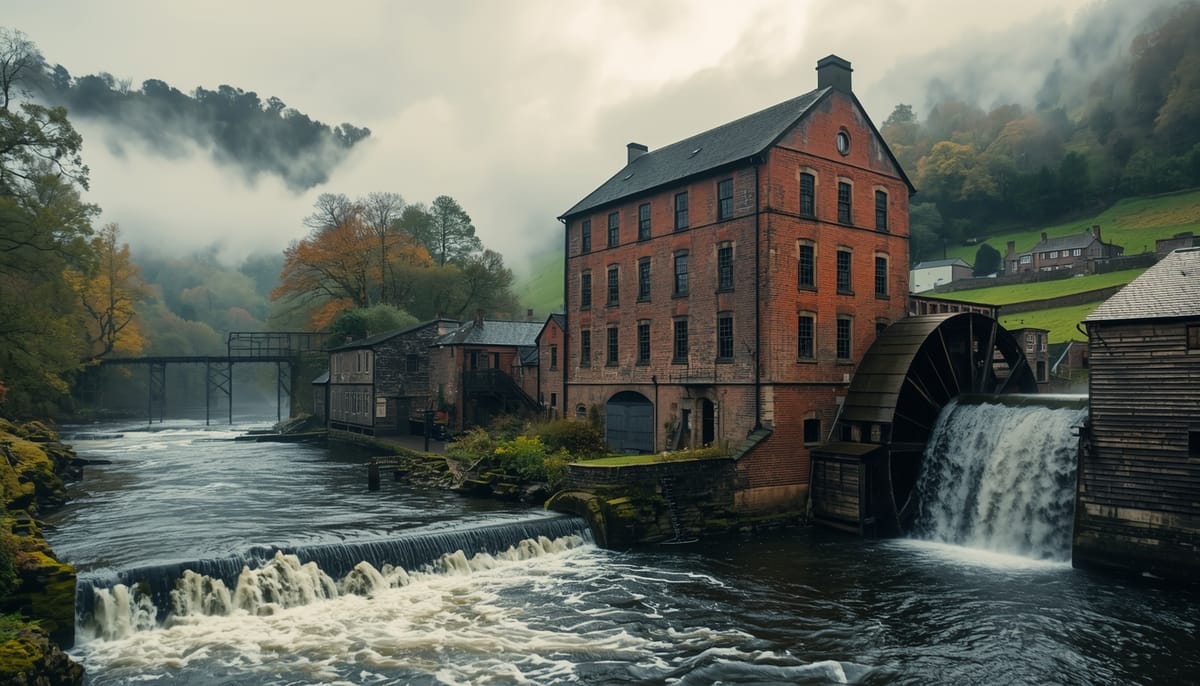
To solve this scalability problem, Arkwright closed a successful funding round (Venture Capital) with the wealthy investor Jedediah Strutt. With that seed capital, they have just inaugurated Cromford Mill, a colossal facility on the banks of the river Derwent.
The "Factory System": The end of remote work
The genius of Cromford Mill lies not only in its machinery, but in its revolutionary business model: the Factory System. Arkwright has centralized the power source (the river water) and clustered all his "servers" (the spinning frames) inside a single multi-story building.
From now on, the worker is no longer the owner of their time or their tools. The operative must physically commute to this centralized hub, clock in at an exact time imposed by the factory bell, and synchronize their biological rhythm with that of the machine. Inanimate energy has taken control of the workflow.
Tension in the labor market
The preliminary results are astonishing. The yarn produced at Cromford is stronger, finer and, above all, infinitely cheaper. Operating costs have collapsed, allowing Great Britain to compete head to head for the first time with the legendary cottons of India.
Yet not all the news is good in the entrepreneurial ecosystem. Traditional hand spinners are watching their rates plummet and have begun to organize. Word in the clandestine tavern forums is that bands of analog trolls are plotting to boycott and destroy these new machines.
Be that as it may, the source code of society has been rewritten. The Industrial Revolution has logged in, and there is no longer an off button.
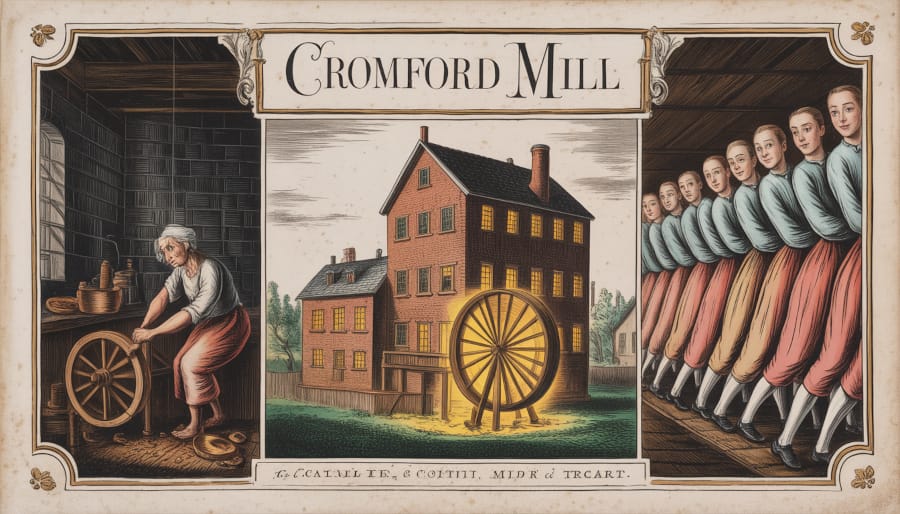
THE END OF THE PEASANT 'HOME OFFICE'!
Tired of your yarn tangling on the spinning wheel while the goats leap around your living room? Join Arkwright's Factory System™. We offer hydraulic 'Cloud Computing' powered by the river Derwent and a high-fidelity bell that will tell you exactly when to be productive. Stop being a rural entrepreneur and become a brand-new cog in the machine of progress!
* A donation to the Pultsar News project




Comentarios ()