
SEASICK ON DRY LAND! — The Jesuit who laughed at Aristotle nearly gives up the ghost in the Andes and concludes the first Americans came on foot
Seville. Juan de León’s print shop smells of fresh ink and damp paper. On the table at the back lie the sheets of a fat book whose title won’t fit on one line: Natural and Moral History of the Indies, which deals with the notable things of the heavens, elements, metals, plants and animals thereof. It is dedicated to the Most Serene Infanta Isabel Clara Eugenia. The author is a Jesuit from Medina del Campo, Father José de Acosta, who has spent more than fifteen years between Peru and New Spain, and who today, at fifty, is leafing through the first copy with his nose almost touching the page.
I ask him to tell me what the other books about the Indies don’t dare to. He laughs.
“Start with Aristotle,” he says. “That’s where I started.”
Science: the day he laughed at Aristotle
For nearly two thousand years, learned men have taken it as settled that nobody can live under the equator, in the “torrid zone”: the sun beats straight down and everything burns. Acosta had read it in the philosophers and the poets, and he sailed convinced he wouldn’t be able to bear the heat. He crossed the line in March, with the sun directly overhead.
“It was so much the other way that, at the very moment I crossed it, I felt such cold that sometimes I went out into the sun to warm myself,” he says. “Here I confess I laughed, and made fun of Aristotle’s Meteorology and his philosophy, seeing that in the very place and at the very time when, by his rules, everything should have been burning and turned to fire, I and all my companions were cold.”
It’s not a quip. The whole book is built this way: what the ancients said, what he saw, and where the two disagree, what he saw wins. Quito and the Peruvian lowlands are mild; Potosí is freezing; Brazil is an oven, and they all lie in the same band of the world. So the sun alone doesn’t explain the heat, and other causes are needed: winds, rain, nearness to the sea, altitude. Above all, altitude.
Health: the air that makes you seasick on land
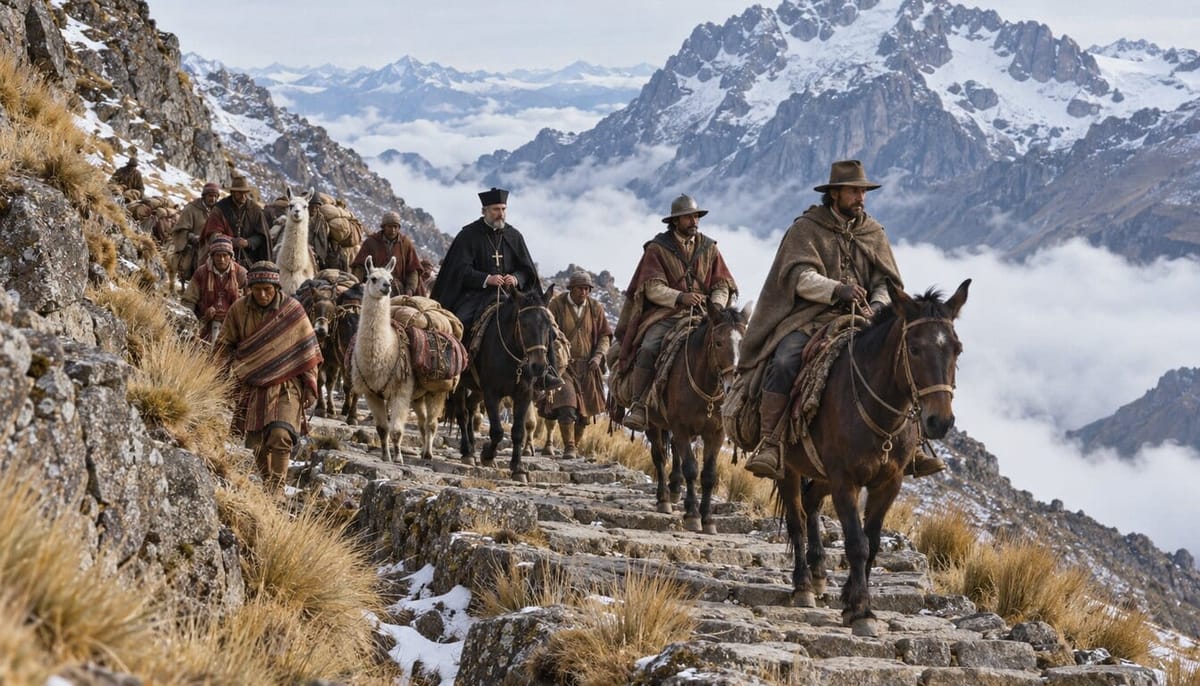
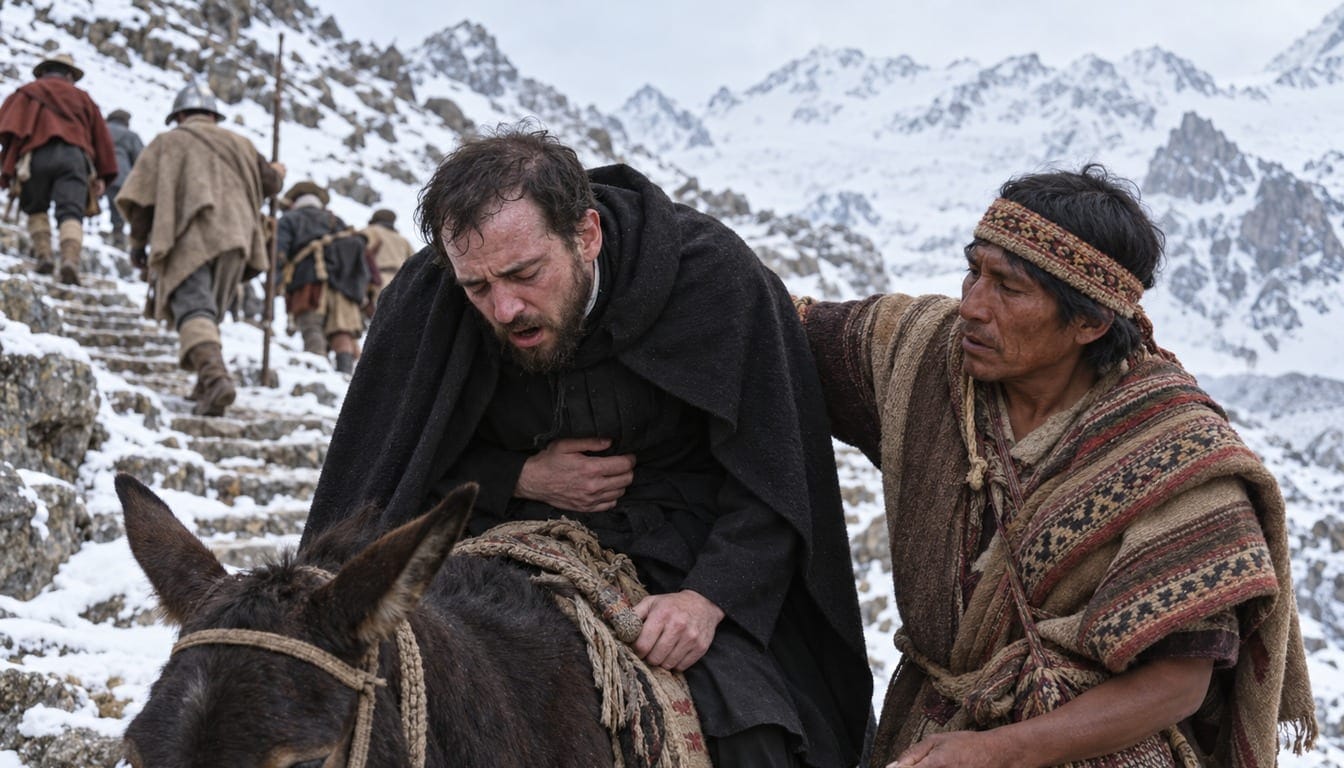
Because altitude nearly killed him. It happened at Pariacaca, the range you must cross going up from Lima towards Jauja, by a stone stairway the Incas cut into the mountain. Acosta had heard the stories and only half believed them. Even so, he went prepared.
“I went as well prepared as I could, following the advice given there by those they call vaquianos, or old hands,” he recalls. “And for all my preparation, when I climbed the stairs, as they call them, which is the highest point of that range, almost at once I was seized by an anguish so deadly that I was minded to throw myself from my mount to the ground.”
What follows is not for the dinner table. His companions, fourteen or fifteen of them, hurried on to get out of that cursed spot as fast as they could, each man for himself, and he was left behind alone with one of the Indian guides, “whom I begged to help hold me on the animal.” Then the retching: “after the food and the phlegm, bile and more bile, one yellow and another green, until I brought up blood.” It lasted three or four hours. Further down, in milder country, he found the others sprawled on the ground; one, while still walking, had asked for confession, sure he was dying. Even the mules dig in up there, and “no spurs are enough to move them.”
The interesting part is what he did next: he thought about it. Acosta crossed the range by three other passes, through the Lucanas and Soras, through the Collaguas and through the Cabanas, and the same thing happened every time, though never as badly as that first time. It struck harder going up from the coast than coming down from the highlands, and it struck the animals too. His conclusion, which sees the light in this print shop today:
“I am persuaded that the element of air is there so thin and delicate that it is not suited to human breathing, which needs it thicker and more temperate.”
In other words: up there, there isn’t enough air. Next to those peaks, he writes, the snowy passes of Spain, the Pyrenees and the Alps “are like ordinary houses beside tall towers.”
Origins: they came on foot
And here comes the book’s second bombshell, the one that will start the most arguments over dinner in Salamanca. Where did the Indians come from?
The theories are on everyone’s lips: they came from Plato’s Atlantis, they are a lost tribe of Israel. Acosta takes them apart one by one, a chapter each. He grants that some ship may have reached America driven by a storm. But then a doubt grips him that won’t let go: men can arrive by boat, yes, but what about the animals?
“Who could be persuaded that, on a voyage so endless, there were men who took the trouble to carry foxes to Peru, above all the ones they call añas, the filthiest and most foul-smelling breed I have ever seen?” he asks, and can’t quite hold back a smile. “Truly, it is a joke even to imagine it.”
If wolves, foxes and wild beasts couldn’t swim the ocean and nobody brought them over by ship, there’s only one way out. “I have long held that the one land and the other are joined and continue somewhere, or at least come very near each other.” To the north, beyond Florida and Cape Mendocino, nobody has yet seen where the land ends.
The conclusion fits in one sentence, and it’s the kind that makes history: the first settlers came “not so much sailing by sea as walking by land; and they made that journey without thinking, moving their dwellings and lands little by little.”
There was no heroic voyage and no discoverer. There were generations of families pushing on one valley further, without knowing they were changing worlds.
Society: the ones who knew
Ask him who taught him most in the Indies and Acosta names no doctor. He names the vaquianos, whose advice he followed to climb Pariacaca: cover your ears, nose and mouth, and above all keep your stomach warm. He names the guide who stayed with him while the others ran. And he names a highland woman whose name the book doesn’t record.
It was at a tambo, one of the roadside inns of the royal road. He arrived at dusk with his eyes burnt from staring at the snow, in such pain “that I was nearly losing my patience.” Then she came in. “Put this on your eyes, father, and you’ll be well.” It was a piece of freshly killed vicuña meat, still bleeding. He put it on. A little while later the pain had gone.
Nor does he forget the vicuña hunters. The Inca kings, he explains, forbade hunting them except at festivals and on their orders, and in the great drives they call chacos, thousands of Indians gather, ring a whole hillside, take three or four hundred and let the rest go, the females above all, “so they may multiply.” Half of Castile could learn from that arithmetic.
Gossip: the Jesuit versus the skunk
At the print shop they joke about it: the most serious book of the year, dedicated to an infanta, comes with a description of vomiting in four colours and a personal attack on an animal. The añas, which elsewhere they call skunks, strike Acosta as the foulest thing he has ever smelled, and he never misses a chance to say so.
Then there’s the business side. Vicuña meat, he writes, “is not good, though the Indians eat it and make cusharqui, or jerky, of it.” What’s valuable is the wool, “like soft silk”, and above all the bezoar stones that form in their stomachs and fetch the price of jewels in Europe, because they are said to cure poisons. More than one lord who has never seen a vicuña keeps one set in gold.
Somebody will have to go and look
Evening falls over the Guadalquivir and Juan de León’s men start putting away the type. I ask Father Acosta whether he’s sure about the land route. What if he’s wrong?
“There is neither reason against it nor experience to undo my opinion,” he answers, as if reciting. “So far, at least, there is no certainty to the contrary.”
He goes quiet for a moment, looking at the pages.
“Some pilot will have to sail north past Cape Mendocino and see it with his own eyes. I’m no longer the man for that journey.”
And he goes back to his book.
Hernando de las Rutas covers exploration and science for Hispanidad Global. Father Acosta’s words in quotation marks are translated from his “Historia natural y moral de las Indias” (Seville, 1590), books I to IV. Not until 1728 would Vitus Bering sail the strait that now bears his name. Two and a half centuries after this book, Alexander von Humboldt wrote in his “Cosmos” that it holds “the foundation of what we now call the physics of the globe”.
Vicuña Blankets
Heading up to the puna?
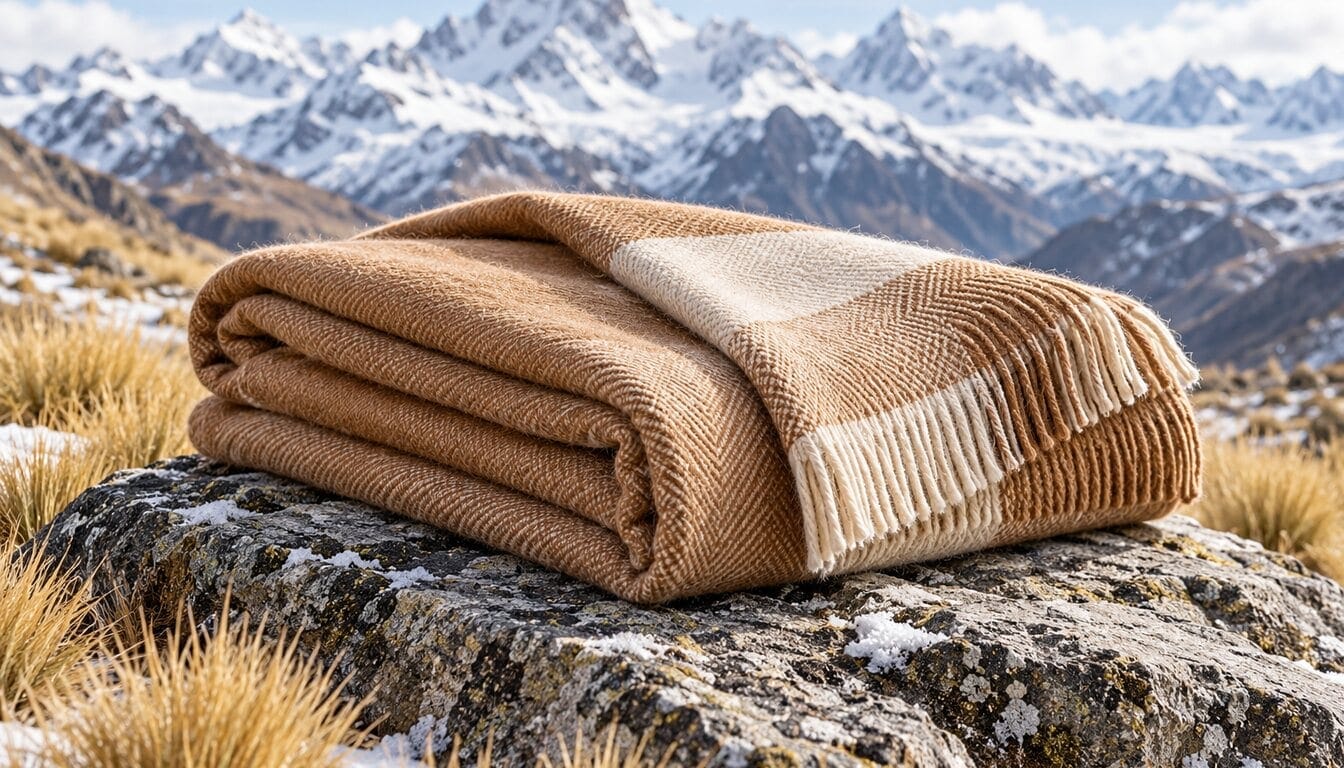
Wool as soft as silk, in its own natural colour that never fades. Keeps the stomach warm, just as the mountain guides advise, and the experts say it soothes the kidneys. As for gout, there is no sure evidence yet.
* Donativo para el proyecto Pultsar News
Comentarios ()